Featured AI Wearables & Smart Hardware Catalog
Explore our production-ready smart hardware platforms engineered for private label branding, global distribution, and custom OEM deployment.

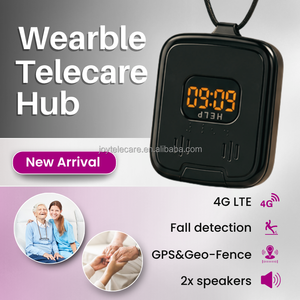
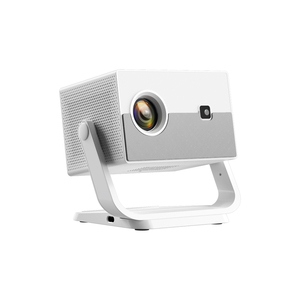
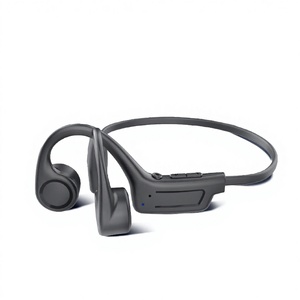
State of the Art: The Architecture of Next-Gen Smart Scanning Pens
An authoritative analysis of optical character recognition (OCR) sensors, neural machine translation (NMT) engines, and embedded hardware design in modern smart scanning devices.
Optical Sensor & 120 FPS High-Speed Camera
Modern Smart Scanning Pens rely on high-frame-rate CMOS optical sensors (operating at 120 frames per second or higher) coupled with wide-angle macro lenses. This hardware configuration guarantees that text capturing remains crisp even during rapid manual sweeping across printed pages. Integrated LED fill lights dynamically adjust illumination to mitigate paper glare, reflective coating interference, and poor ambient lighting conditions.
On-Device Edge AI & Offline NMT Engines
To eliminate latency and eliminate dependency on Wi-Fi connectivity, leading Smart Scanning Pen manufacturers embed compressed offline Neural Machine Translation (NMT) models directly into local NAND flash memory. Utilizing multi-core RISC/ARM processors with dedicated Neural Processing Units (NPUs), these pens parse, segment, and translate multi-lingual text in under 0.2 seconds per line with over 99% accuracy.
Acoustic Engineering & Neural Text-To-Speech (TTS)
Auditory feedback is critical for language learners and individuals with reading difficulties such as dyslexia. Premium translation scanning pens incorporate high-fidelity micro-speakers, dedicated Audio DSP chips, and dual-microphone active noise suppression algorithms. Neural TTS engines synthesize natural human pronunciation across 112+ languages, facilitating immersive auditory reading comprehension.
As a trusted OEM/ODM smart hardware manufacturer based in Shenzhen, China, Shenzhen Smareyetech Technology Co., Ltd. leverages over 16 years of hardware engineering experience to deliver industrial-grade smart scanning pens, dictionary translation devices, AI desktop companions, and smart wearable hardware to brand partners across 50+ countries.
Key Technology & Development Trends in Smart Scan Hardware
Understanding the technological shifts shaping the next generation of handheld translation and scanning equipment.
1. Convergence of LLM & Generative AI on Handheld Edge Devices
The industry is transitioning rapidly from simple word-for-word translation lookup to full-context AI comprehension. Modern smart dictionary scan pens integrate edge-quantized Large Language Models (LLMs). This enables real-time grammatical analysis, contextual idiom explanation, voice-interactive AI tutoring, and automated sentence rephrasing directly on the handheld device without external API calls.
2. Multi-Modal Capture: Photo Scanning + Line Scanning + Voice AI
Form factors are evolving beyond narrow roller scanner nibs. Next-generation smart scanning pens combine a high-resolution rear CMOS photo camera (for capturing entire document pages or street signs) with a high-precision tip roller optical lens for line-by-line reading. Dual-mode input allows seamless toggling between instant photo translation and granular text scanning.
3. Specialty Assistive Tech & Dyslexia Reading Support
Educational institutions and government literacy initiatives are driving massive demand for assistive reading devices. Manufacturers are incorporating custom firmware featuring Dyslexie fonts, line-highlighting UI modes, adjustable voice pitch/speed controls, and built-in phonetics breakdown, making smart scanning pens essential tools for special education (SPED) markets.
Global B2B Procurement Trends & Sourcing Strategy
Strategic recommendations for brand owners, distributors, and educational technology buyers evaluating hardware suppliers in China.
Procuring smart scanning pens and AI translation hardware demands meticulous evaluation beyond unit cost. Importers must prioritize platform stability, dictionary copyright authorization, firmware customization capability, and strict quality control standards. Below is a detailed procurement benchmark comparison for sourcing smart scanning hardware.
| Evaluation Vector | Tier-1 Factory Standard (Smareyetech) | Standard OEM Suppliers | Procurement Risk / Business Impact |
|---|---|---|---|
| Defect Rate Threshold | < 0.3% Standard (Best 0.12%) | 2.0% – 5.0% Industry Average | High defect rates ruin brand reputation on Amazon/Retail and incur costly reverse logistics. |
| Quality Control Protocol | 4-Step QC: Sensor calibration, screen matrix, 48h aging, drop/aging test | Basic spot-check / visual inspection | Inconsistent touch responsiveness and premature battery degradation in field use. |
| Firmware & App Customization | 70+ In-House R&D Engineers (Firmware, UI/UX, Dictionary SDK, Cloud API) | Third-party outsourced software code | Inability to patch bugs, update offline dictionaries, or launch custom branding on deadline. |
| Compliance & Certifications | ISO 9001:2015, CE RED, FCC Part 15, RoHS, REACH, CA Prop 65, GCC | Incomplete or generic self-declarations | Customs seizure in European and North American ports due to non-compliant wireless modules. |
| IP Protection Guarantee | 100% Client IP Ownership for custom molds & code; Strict NDA before tech discussions | Ambiguous IP clauses | Risk of proprietary hardware designs or unique software UI being resold to competitors. |
Why Partner with Shenzhen Smareyetech Technology Co., Ltd.
Operational excellence, advanced manufacturing facilities, and uncompromised engineering capability.
10,000+ SQM Manufacturing Hub
Operating out of Building C, Bright Wat Industrial Park in Shenzhen, our facility houses 8+ high-speed SMT surface-mount lines, dust-free assembly workshops, automated optical testing rigs, and dedicated packaging units capable of outputting over 50,000 units monthly.
70+ In-House R&D Engineers
Our multidisciplinary engineering team spans embedded C/C++ firmware development, Android OS kernel customization, optical system design, Bluetooth/Wi-Fi RF tuning, and mechanical enclosure design with over 30 self-owned technological patents.
Rigorous 4-Stage Quality Control
Every unit undergoes strict quality validation: Stage 1 Sensor & Camera Calibration; Stage 2 Display & Touch Matrix Verification; Stage 3 48-Hour Continuous Battery Burn-In & Aging; Stage 4 Drop, Vibration, and Thermal Shock Testing.
Frequently Asked Questions for B2B Procurement
Clear, authoritative answers regarding MOQ, customized manufacturing, compliance, and international shipping.
We offer tiered MOQ structures to accommodate diverse brand scale. White-label orders with silk-screen logo printing start as low as 300 to 500 units. Custom OEM orders (including custom packaging, localized firmware, specialized boot animations, and custom colorways) start at 1,000 units. Full ODM custom hardware projects involving custom plastic molds and proprietary PCB development start at 3,000 units. Logo laser-engraving on in-stock platforms is available from 100 units.
Standard prototype samples require 10 to 15 business days (with a 7-day expedited rush option available for standard inventory platforms). White-label mass production typically ships within 15 to 25 days. First-run OEM custom orders take 45 to 60 days to allow for custom packaging printing, tooling setup, and regional certification testing. Repeat OEM production runs are completed in 30 to 45 days. Complex ODM projects span 45 to 90 days.
Yes. Our in-house R&D team can pre-install custom dictionary database files (Stardict, MDX formats), custom offline NMT language packages, and specialized educational software APKs directly into the flash memory during production. We also support SDK/API integration for clients who maintain their own proprietary dictionary apps or cloud translation services.
Shenzhen Smareyetech Technology Co., Ltd. holds 8 core organizational and product certifications: ISO 9001:2015 Quality Management System, CE (RED), FCC Part 15, RoHS, REACH, WEEE, California Proposition 65, and GCC. For specialized medical or regional telecom regulatory compliance, our technical team assists client partners with comprehensive lab test reports and technical documentation.
We guarantee 100% IP ownership for client-funded custom designs, plastic injection molds, firmware source code additions, and app assets. A binding Non-Disclosure Agreement (NDA) is executed prior to any technical sharing. Custom tooling and molds are exclusively registered to your company and will never be utilized for standard catalog production or third-party orders.
Yes. We export products under FOB, CIF, EXW, and DDP terms to over 50 countries. Our specialized Amazon FBA DDP service handles product labeling, carton FBA prep, customs clearance, and duty payments directly to Amazon fulfillment centers across North America, Europe, the UK, Japan, and Australia, with transit timelines averaging 10 to 18 days.
Ready to Build Your Smart Scanning Pen & Wearable Line?
Connect directly with an experienced hardware project engineer to receive platform specifications, firmware customization options, and factory wholesale pricing within 24 hours.