Executive Market Landscape: Why Bangkok Enterprises Source OEM Wearables directly from Shenzhen Production Ecosystems
As the digital epicenter of Thailand and the broader ASEAN region, Bangkok has emerged as a premier hub for smart technology adoption. Driven by the national Thailand 4.0 policy framework, Eastern Economic Corridor (EEC) digital health initiatives, and an accelerating wellness tourism sector, demand for custom smart wearables in Metropolitan Bangkok is expanding at a Compound Annual Growth Rate (CAGR) exceeding 18.4%. From premier private healthcare conglomerates in Sukhumvit (such as Bumrungrad International and Bangkok Hospital network) seeking continuous patient monitoring solutions, to major retail channels across Siam Paragon and CentralWorld distributing private-label fitness bands, the appetite for reliable wearable hardware has reached an unprecedented scale.
However, procuring high-density, multi-sensor wearable hardware locally presents a structural challenge for Thai tech brands and procurement teams. While Bangkok houses skilled software developers, systemic local electronics manufacturing remains concentrated on automotive assembly and home appliances. High-precision SMT (Surface Mount Technology) line integration for micro-wearables—requiring multi-layer PCB micro-soldering, optical PPG array calibration, and ultrasonic IP68 sealing—is uniquely concentrated in Shenzhen, China.
Consequently, sophisticated buyers in Bangkok are bypassing traditional middleman trading agencies in favor of direct engineering partnerships with specialized OEM/ODM factories. By coupling Shenzhen’s mature industrial manufacturing backbone with localized Thai compliance (including NBTC radio frequency approvals and TISI battery safety certifications), Bangkok enterprise brands achieve a distinct competitive advantage in time-to-market, pricing, and product customization.
Evaluating Sourcing Channels: Top OEM Wearable Device Supplier Strategies in Bangkok
When evaluating prospective suppliers under the keyword umbrella "Top 10 OEM Wearable Device Supplier & Suppliers in Bangkok", decision-makers must distinguish between local inventory traders, regional solution brokers, and true original equipment manufacturers (OEMs). To provide actionable information gain, the following structured comparative matrix outlines the operational capabilities, cost efficiency, compliance support, and IP risk across the primary supplier channels operating in the Bangkok trade corridor:
| Supplier Channel Category | Typical MOQ Tiers | NBTC & TISI Compliance | Firmware / Thai Language Localization | Unit Cost & Margin Potential | IP & Custom Mold Security |
|---|---|---|---|---|---|
| Direct Shenzhen OEM Leader (e.g., Smareyetech) | 500 - 1,000 Pcs (Flexible for White-Label & OEM) | Full Technical File Support (CE, RED, FCC, RoHS provided for NBTC Type Approval) | In-House R&D (70+ Engineers): Custom Thai vector fonts, line-wrapping, and dedicated APIs | Maximum Margin (Direct factory price, eliminates 25-40% broker markups) | 100% Client Ownership under formal international NDA & ODM contracts |
| Bangkok Local Trading Companies | 100 - 300 Pcs (Off-the-shelf inventory) | Varies; often reliant on grey-market imports lacking formal certification | Basic machine-translated Thai text; frequently suffers from font clipping and layout breakages | Low Margin (High wholesale cost due to multi-tier distributor markups) | Zero IP protection; identical models sold simultaneously to direct local competitors |
| Third-Party ODM Middleware Integrators | 3,000 - 5,000 Pcs | Requires client to independently manage local testing labs | Software customization available but requires external outsourced firmware teams | Moderate (High engineering fees and project management surcharges) | Shared IP; core algorithms often remain property of the middleware vendor |
| Generic Online Wholesale Platforms | 10 - 50 Pcs | No custom certification files available for Thai customs clearance | Fixed firmware; non-customizable UI or application ecosystem | Unpredictable (High risk of batch variation and high warranty return rates) | No protection; standard commoditized white-label hardware |
As demonstrated above, partnering directly with a certified, accountable factory like Shenzhen Smareyetech Technology Co., Ltd. bridge-connects high-grade electronic engineering capabilities with the specific regional requirements of the Thai market, delivering structural advantages over local sourcing brokers.
Localized Application Scenarios: Where Custom Wearables Excel in Metropolitan Bangkok
Developing wearable devices for Bangkok requires more than taking a standardized product off a shelf; it demands engineered adaptation to the city's unique climate, urban infrastructure, social demographics, and commercial ecosystems. Smareyetech's OEM platform serves four vital commercial scenarios across Thailand:
1. Private Telehealth & Eldercare in Sukhumvit & Nonthaburi
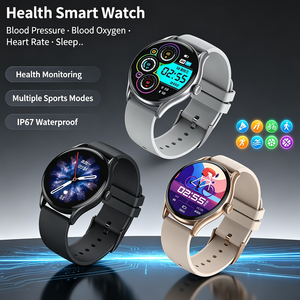
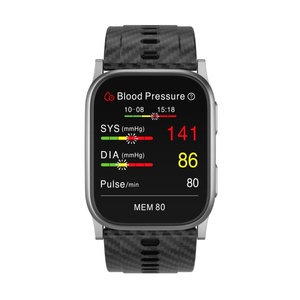
Thailand is rapidly entering an aged society. Private healthcare networks and assisted living developments across Greater Bangkok utilize Smareyetech’s Medical-Grade Connected Smartwatches (featuring Continuous Body Temperature, PPG Heart Rate, ECG, and SpO2 monitoring). Integrated with emergency SOS buttons and automatic fall detection, these devices transmit real-time telemetric data to hospital triage dashboards via customized Bluetooth & 4G SDKs.
2. EEC Industrial Logistics & Fleet Safety Monitoring
Along the heavy transport corridor connecting Bangkok to the Eastern Economic Corridor (Chonburi/Rayong ports), logistics operators deploy custom wristbands equipped with AOA High-Precision Positioning & Skin Temperature Sensors. These ruggedized devices monitor driver fatigue, body heat stroke risks under tropical conditions, and warehouse staff localization with meter-level precision.
3. Outdoor Fitness & Tropicalized Sports Technology
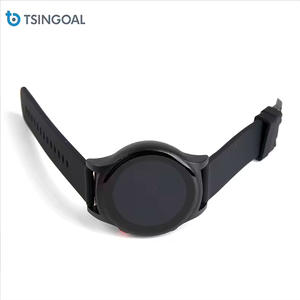
Bangkok's active outdoor community—frequenting Lumpini and Benjakitti Parks—operates under intense heat (averaging 32°C to 38°C) and extreme humidity (70%+ RH). Standard consumer wearables often suffer from acoustic mesh breakdown or PPG sensor readings corrupted by sweat accumulation. Smareyetech tropicalizes OEM sports watches with high-density anti-corrosion TPE bands, IP68 dual-chamber waterproof casing, and specialized sweat-filtering optical algorithms.
4. EdTech & Safety Tracking in Bangkok International Schools
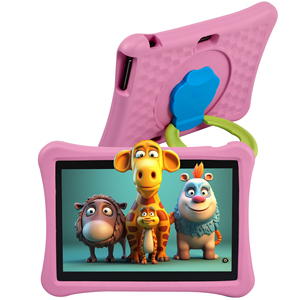
To address child safety concerns in bustling urban environments, private educational institutions and regional brands utilize Smareyetech’s 4G LTE Kids Smartwatches & Android Learning Tablets with shockproof EVA protection. Features include geofencing along main transit lines (BTS/MRT), two-way HD video calls, restricted parental control software, and instant SOS alerts routed directly to school security administrators.
Engineering for Thailand: Tropicalization, RF Signals & Thai Font Localization
Deploying smart hardware in Southeast Asia demands meticulous attention to environmental and software adaptation. Cheap OEM wearables sourced without local engineering parameters fail rapidly in tropical environments or present severely compromised user experiences. Smareyetech solves these regional hurdles at the engineering design phase:
A. Anti-Humidity & Thermal Dissipation (Tropicalization)
Bangkok's ambient conditions present a dual threat to electronics: moisture ingress and thermal degradation of Lithium-polymer batteries. Our OEM hardware incorporates hydrophobic nano-coatings across PCB assemblies, high-grade silicon sealing rings rated for continuous immersion (IP68), and battery safety ICs engineered to operate safely up to 60°C ambient heat without thermal throttling or capacity degradation.
B. Thai Script Rendering & Typography Engine
Thai is a complex non-Latin script involving top/bottom vowel modifiers and tone marks above consonant baselines. Standard OEM microcontrollers using basic ASCII bitmap fonts often display fragmented Thai characters, floating tone marks, or line-wrap overflow errors. Smareyetech’s R&D team implements custom vector font engines within our RTOS (Real-Time Operating System) and Android platforms, ensuring crisp, perfectly aligned Thai notification displays for mobile app syncing (Line App, WhatsApp, SMS).
C. RF Signal Optimization in High-Density Urban Environments
Metropolitan Bangkok exhibits dense radio frequency noise due to overlapping cellular networks, high-rise concrete structures, and BTS/MRT electromagnetic fields. Our RF engineers utilize custom ceramic patch antennas and fine-tune Bluetooth 5.3 LNA (Low Noise Amplifier) gain, achieving stable smartphone pairing up to 15 meters away even within high-density commercial centers like Rama I and Silom.
Regulatory Blueprint: NBTC Approval, TISI Safety Standards & Duty-Free Imports
Navigating customs clearance at Suvarnabhumi Airport Cargo Terminal or Laem Chabang Deep Sea Port requires complete regulatory alignment. Sourcing smart devices without proper factory documentation risk goods seizure, heavy compliance fines, or customs rejection. Smareyetech provides comprehensive engineering test reports to streamline regulatory clearance for Thai importers:
NBTC (Telecom Certification)
Any wearable incorporating active wireless modules (Bluetooth, Wi-Fi, 4G LTE, NB-IoT) must obtain certification from the National Broadcasting and Telecommunications Commission (NBTC) in Thailand. Smareyetech provides full CE (RED) and FCC Part 15 test reports, RF spectrum compliance data, and SAR (Specific Absorption Rate) documentation, enabling your Thai legal entity to secure NBTC Class B or Supplier's Declaration of Conformity (SDoC) rapidly.
TISI Battery Safety (TIS 2217-2548)
Lithium-ion batteries used in consumer gadgets fall under the mandatory oversight of the Thai Industrial Standards Institute (TISI). Smareyetech equips all wearable models with UN38.3, IEC 62133, and MSDS safety-certified battery packs featuring dual circuit protection ICs against overcharging, short-circuiting, and physical impact.
ACFTA Form E: 0% Preferential Import Duty for Thai Brands
Under the ASEAN-China Free Trade Area (ACFTA) agreement, Thai companies importing smart wearable technology directly from certified manufacturers in China can claim 0% preferential tariff rates (exempting the standard 10% consumer electronics customs duty) by presenting a valid Form E Certificate of Origin. Smareyetech issues official Form E documentation with every export shipment, instantly increasing your gross import margins.
Factory Spotlight: Shenzhen Smareyetech Technology Co., Ltd.
Headquartered in Building C, Bright Wat Industrial Park, Shenzhen, Shenzhen Smareyetech Technology Co., Ltd. has established itself as an international benchmark in OEM/ODM smart wearable manufacturing since its engineering founding in 2010 (incorporated 2013). Operating a massive state-of-the-art facility spanning over 10,000 square meters, Smareyetech integrates SMT surface mounting, precision housing molding, screen bonding, automated assembly, cleanroom testing, and custom retail packaging under one unified management system.
Strict Quality Assurance & Defect Rates Below 0.3%
While typical wearable tech suppliers experience mass-production defect rates between 2% and 5%, Smareyetech maintains a validated mass-production defect rate below 0.3%. Every single device leaving our line undergoes a rigorous 4-step quality control protocol:
- Step 1: Automated Optical & Functional Testing — Verifying sensor accuracy (heart rate, blood oxygen, blood pressure), Bluetooth transmission stability, and charging performance.
- Step 2: 100% Screen & Touch Calibration — Screening out dead pixels, brightness non-uniformity, and touch response latency.
- Step 3: 48-Hour Full Battery Aging Test — Subjecting every assembled device to active charge/discharge cycles to eliminate early battery cell dropouts.
- Step 4: Water Pressure Sealing Chamber Test — Testing batch sealing under pneumatic pressure tanks to guarantee IP67/IP68 ingress protection ratings.
Verified International System & Quality Credentials
Smareyetech holds eight self-owned international system and product credentials: ISO 9001:2015 Quality Management System, CE (RED), FCC Part 15, RoHS, REACH, WEEE, CA Prop 65, and GCC. For clients developing medical-adjacent health tracking projects, our compliance division assists with technical test reports and documentation required for regional healthcare registration.
Frequently Asked Questions (FAQ) for Sourcing Wearables in Bangkok
Ready to Build Your Custom Smart Wearable Line in Bangkok?
Partner directly with Shenzhen’s premier OEM/ODM smartwatch manufacturer. Share your project requirements, target specifications, or volume target, and an expert wearable project engineer will reply with a detailed hardware evaluation and factory quotation within 24 hours.
Get a Quote