Factory Direct Portfolio
Featured AI & Wearable Hardware Platforms
Validated OEM/ODM hardware solutions ready for localized firmware customization, private labeling, and Tokyo enterprise deployment.

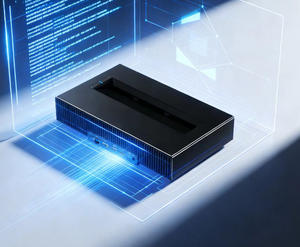
Smart 4G GPS Safety Watch with Auto Fall Detection & SOS
View Details →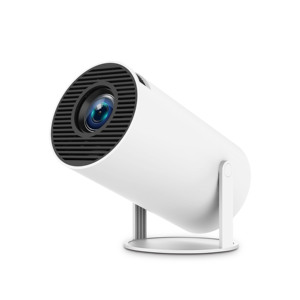
Hy300 Pro 4K Wifi 6 Portable Smart Projector Android 11
View Details →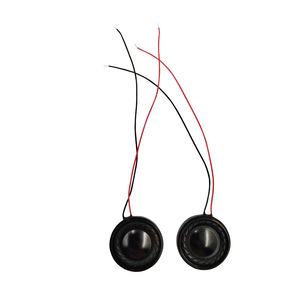
Portable Noise-Canceling Security Neckband Headset Speaker
View Details →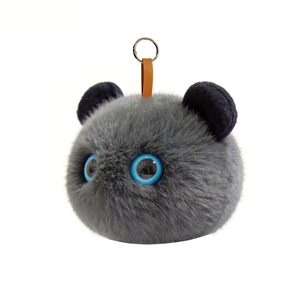
AI Smart Wireless Stereo Audio Plush Bear Speaker
View Details →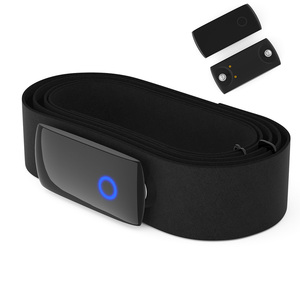
Smart Beat Flexible Heart Rate Chest Monitor Strap ANT+ BLE
View Details →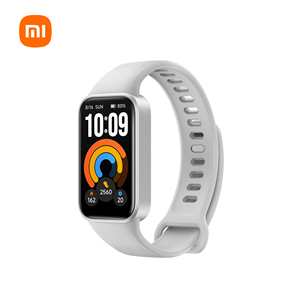
Smart Band 11 Active 1.47" TFT 5ATM GPS Health Tracker
View Details →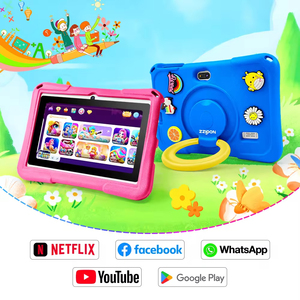
7 Inch Rugged Educational Kids Tablet Android 14 NFC Pad
View Details →
Executive Industry Whitepaper
Navigating Tokyo's Pocket AI Translator Supply Chain
An authoritative analysis on how Japanese enterprises, tourism groups, and electronics distributors source high-precision offline translation hardware through Shenzhen-Tokyo OEM integration.
The Greater Tokyo Inbound Boom & Language Infrastructure
With Japan welcoming over 33 million international visitors annually, Tokyo has become the world’s most dynamic nexus for cross-border commercial transactions, transit hospitality, and multilingual retail operations. From high-density commercial hubs in Shinjuku, Ginza, and Akihabara to major international gateways like Haneda (HND) and Narita (NRT) Airports, the requirement for instantaneous, offline-capable, highly accurate voice-to-voice translation hardware has transitioned from a convenience to essential infrastructure.
The Tokyo Manufacturing Paradox: Design vs. Scale
While Japanese consumer electronics brands in Tokyo excel at Industrial Design (ID), UX architecture, and localized Large Language Model (LLM) tuning, maintaining agile domestic SMT assembly lines for handheld AI gadgets incurs prohibitive CAPEX and prolonged iteration cycles. Consequently, leading Tokyo technology brand owners, government procurement officers, and retail distributors rely on high-precision Shenzhen OEM/ODM manufacturing partners like Smareyetech to engineer and build localized Pocket AI Translators certified for Japanese regulatory compliance.
Operational Deployment
Localized Application Scenarios Across Tokyo Ecosystems
Pocket AI Translation devices manufactured for the Japanese market are custom-engineered for unique acoustic, linguistic, and regulatory environments.
1. Retail & Duty-Free Outlets
In high-volume retail hubs like Ginza Six, Shinjuku Department Stores, and Akihabara Electric Town, retail associates utilize dual-screen pocket translators with integrated camera OCR. Staff instantly translate tax-free receipts, price tags, and product ingredients while maintaining natural face-to-face dialogue via dual noise-canceling mic arrays.
2. Transit & Smart Mobility
Tokyo’s complex subway networks (Tokyo Metro and JR East) deploy rugged, lanyard-attached AI translators at station kiosks. Operating in high-decibel ambient environments (75dB+ subway noise), local devices leverage neural AI beamforming microphone algorithms to process directions, IC card recharges, and route inquiries instantaneously.
3. Medical & Clinic Consultations
International clinics across Minato-ku and Chiyoda-ku require specialized medical-grade terminology translation. Dedicated offline NPU translation hardware ensures offline compliance (preventing sensitive patient PHI data from uploading to unverified public cloud servers) while accurately translating clinical symptoms, dosages, and consent forms.
4. Financial & Corporate Meetings
Corporate headquarters in Marunouchi utilize pocket translation hardware equipped with real-time speech transcription, cloud session export, and specialized business Japanese (Keigo / Honorific language model recognition), allowing non-native executives to communicate fluently during legal and financial negotiations.
Hardware Architectures
Engineering Standards for the Tokyo Market
Procuring Pocket AI Translators for Japanese distribution demands rigorous attention to both acoustic engineering and hardware-level natural language processing (NLP).
- On-Device Offline NPU Acceleration: Embedded neural processing units (0.5 to 2.0 TOPS) run localized Japanese-English, Japanese-Chinese, and Japanese-Korean offline models without relying on active Wi-Fi or cellular networks.
- Keigo & Dialect NLP Algorithms: Firmware engines engineered with specialized tokenization models capable of distinguishing polite honorific speech (Sonkeigo), humble speech (Kenjougo), and casual spoken dialects across Kansai and Kanto regions.
- Global eSIM & NTT Docomo Band Support: Factory integration of LTE-FDD bands B1/B3/B8/B19/B21, ensuring native 4G coverage across Japanese telecom carriers (Docomo, SoftBank, AU, Rakuten Mobile).
- Precision Optics for Photo Translation: High-resolution auto-focus macro camera modules coupled with OCR software tuned for vertical Japanese text alignment (Tategaki) and complex Kanji stroke recognition.
Micro-Architecture Highlights
Acoustic Front-End
Dual Knowles MEMS Microphones + DSP Noise Suppression Chipset.
Display Interface
2.8" - 4.0" HD IPS Capacitive Touchscreens with anti-fingerprint oleophobic coating.
Thermal & Power Management
1500mAh - 2500mAh high-density Cobalt Li-polymer battery with 8-12 hours active talk-time and 10 days standby.
Chassis Finish
CNC Anodized Aluminum Alloy / Tactile Matte Polycarbonate engineered for high drop resistance (1.2m drop standard).
Procurement Technical Specs
Enterprise B2B Hardware Sourcing Matrix
Compare generic consumer translation units against industrial-grade, Tokyo-compliant OEM Pocket AI Translator platforms.
| Hardware Feature | Generic Consumer AI Translator | Smareyetech Enterprise OEM AI Translator |
|---|---|---|
| Translation Latency | 1.2s - 2.5s (Cloud Dependent) | <0.2s - 0.5s (Edge-NPU Accelerated) |
| Japanese NLP Engine | Generic machine translation API | Keigo-Tuned LLM + Kanto/Kansai Dialect Modeling |
| Offline Languages | 4 - 8 Basic Languages | 16 - 32 High-Precision Offline Packages (Incl. JP/EN/ZH/KR/ES/FR) |
| Japanese Regulatory Certs | Uncertified / Basic CE only | TELEC (MIC Radio Law), VCCI Class B, RoHS, PSE Battery Certified |
| Acoustic Hardware | Single Omnidirectional Mic | Dual Far-Field MEMS Array + AI Beamforming Noise Canceling |
| Optical OCR Engine | Horizontal text only (5MP) | Vertical (Tategaki) & Horizontal 13MP Auto-Focus Camera |
| White-Label Customization | Logo printing only | Deep OEM: Custom Firmware, UI/UX, Boot Animation, SDK/API Access |
| Defect Rate Standard | 2.0% - 5.0% Industry Avg | Strict <0.3% Mass-Production Defect Rate Target |
Factory Expertise
Why Tokyo Technology Brands Partner with Smareyetech
Shenzhen Smareyetech Technology Co., Ltd. brings 16+ years of wearable and smart hardware engineering excellence to international B2B projects.
10,000+ sqm SMT & Assembly Facility
Operating out of Building C, Bright Wat Industrial Park, Shenzhen, our facility houses 8+ high-speed SMT lines, cleanroom assembly workshops, automated optical inspection (AOI) stations, and full packaging lines under strict ISO 9001:2015 management.
70+ R&D Hardware & Firmware Engineers
Our in-house R&D team manages the entire engineering stack: schematic layout, 6-layer PCB design, NPU AI model quantization, Android/Linux OS customization, BLE stack optimization, and cloud translation API integration (Microsoft Azure, Google Cloud, Baidu AI, DeepL).
Rigorous 4-Step Quality Assurance
Every single batch undergoes our comprehensive QC protocol: 100% functional sensor testing, display panel screen inspection, 48-hour continuous battery aging/charge cycling, and high-frequency drop and vibration stress testing, reducing field RMA rates to <0.3%.
Procurement Intelligence
Frequently Asked Questions by Tokyo Sourcing Teams
Clear answers regarding OEM/ODM collaboration, regulatory compliance, Japanese localization, and logistics.
How do your Pocket AI Translators handle Japanese honorifics (Keigo) and contextual nuances?
Our software R&D team integrates customized neural translation models specially fine-tuned for Japanese linguistic structures. Unlike generic translation algorithms that struggle with omitted subjects and formal honorific levels (Sonkeigo, Kenjougo, Teineigo), our firmware dynamically analyzes sentence context to deliver naturally phrased polite Japanese suitable for hospitality and corporate retail environments.
What certifications are required to import and sell Pocket AI Translators in Tokyo?
To lawfully distribute wireless devices in Japan, hardware must comply with the TELEC certification (Japan Radio Law Technical Conformity Mark for Wi-Fi/Bluetooth/4G) and VCCI (Voluntary Control Council for Interference) Class B standards for electromagnetic emissions. Furthermore, internal lithium batteries must carry PSE certification under the Electrical Appliance and Material Safety Law. Smareyetech assists clients with complete testing documentation and factory audits to secure all Japanese regulatory marks.
What is the typical Minimum Order Quantity (MOQ) and lead time for OEM projects?
We support scalable procurement tiers. Custom OEM branding (logo laser engraving, customized packaging, branded boot animations, and pre-installed language packs) starts at 1,000 units. Full ODM custom industrial design and mold creation start at 3,000 units. Standard golden sample preparation takes 10–15 days, while first-run mass production requires 45–60 days (repeat OEM orders are fulfilled within 30–45 days).
How does the translation device operate during network outages in underground Tokyo Metro stations?
Our devices feature built-in hardware Neural Processing Units (NPUs) that store compressed, high-accuracy offline language models locally in high-speed eMMC/UFS storage. Even in underground tunnels, basements, or remote mountain locations with zero mobile signal, users experience instant voice-to-voice and photo OCR translation between Japanese, English, Chinese, Korean, and major European languages without data loss.
Who retains the Intellectual Property (IP) for custom ODM AI translator hardware and software?
100% of the Intellectual Property (IP) for custom industrial housing designs, tooling molds, proprietary application software, and customized GUI assets belongs strictly to the client. We execute legally binding Non-Disclosure Agreements (NDAs) prior to receiving any technical documentation, ensuring your proprietary product concept remains exclusive.
Ready to Engineer Your Next-Gen Pocket AI Translator for Japan?
Consult directly with our Senior Engineering Director. Receive hardware platform recommendations, BOM breakdowns, TELEC compliance roadmaps, and factory sample quotes within 24 hours.
Send an Inquiry