
1. The Evolution of OEM/ODM Smartwatch Manufacturing: An Executive Overview
The global wearable technology ecosystem is undergoing a decisive paradigm shift. What began as simple step-counting pedometers has transformed into high-precision, connected biometric diagnostic instruments. For hardware brand managers, enterprise procurement officers, and IoT innovators, choosing the right OEM/ODM custom smartwatch manufacturer is no longer merely a vendor transaction—it is a foundational strategic partnership that dictates product reliability, regulatory compliance, and margin sustainability.
Shenzhen Smareyetech Technology Co., Ltd. (operating as a premier OEM/ODM manufacturing force since 2010 and legally incorporated in 2013) stands at the intersection of advanced hardware miniaturization, algorithmic accuracy, and scalable high-throughput assembly. Operating out of a state-of-the-art 10,000+ square meter manufacturing complex in Shenzhen, China, Smareyetech integrates SMT placement, ultrasonic shell sealing, automated optical inspection (AOI), 48-hour battery stress testing, and IP67/IP68 pressure chamber validation under a unified ISO 9001:2015 quality management structure.
2. Future Procurement Trends in Smartwatch Sourcing (2026–2030)
Based on global procurement analytics across North American, European, and Asia-Pacific B2B sectors, hardware buyers must prepare for four critical technological and logistical trends when establishing OEM/ODM smartwatch contracts over the coming five years:
2.1 Transition from Consumer Wellness to Multi-Sensor Biometric Telemetry
Global consumer demand is rapidly shifting away from single-function smart fitness bands toward multi-modal health monitoring watches. Modern supply chains are prioritizing smartwatches integrated with dual-frequency Photoplethysmography (PPG) sensor arrays, Electrocardiogram (ECG/EKG) micro-electrodes, continuous blood oxygen (SpO2) tracking, peripheral skin temperature probes, and industrial safety metrics such as the WBGT (Wet Bulb Globe Temperature) heatstroke prevention index. Enterprise buyers require manufacturing partners capable of micro-AFE (Analog Front End) board design to prevent signal attenuation and electrical noise cross-talk.
2.2 Edge AI Processing and On-Device Machine Learning micro-LLMs
Next-generation smartwatch platforms are eliminating heavy reliance on continuous cloud connections. Procurement specs increasingly call for ultra-low-power ARM Cortex-M or RISC-V microcontrollers embedded with Dedicated Neural Processing Units (NPUs). This enables on-device gesture recognition, real-time arrhythmia flagging, offline AI voice translation, and predictive battery consumption management directly at the hardware layer—dramatically enhancing data privacy and response latency.
2.3 Strict Regulatory Harmonization and Regional Certification Protocols
Navigating global compliance is one of the highest friction points for importers. Market entry now requires rigorous verification beyond baseline CE and FCC markings. Smartwatch OEM platforms must proactively comply with European RED (Radio Equipment Directive), RoHS 10 substances, REACH SVHC chemical constraints, WEEE recycling directives, California Proposition 65 toxicity limits, and Gulf Cooperation Council (GCC) standards. Custom manufacturing partners must provide comprehensive Technical Construction Files (TCF) alongside lab test documentation to prevent customs detentions.
2.4 Modular Firmware Architecture and FOTA Ecosystem Readiness
Hardware without resilient software updates leads to premature product obsolescence. Modern ODM programs demand modular Real-Time Operating Systems (RTOS) supporting Firmware Over-The-Air (FOTA) updates. Brands require white-label mobile companion applications (iOS and Android) capable of customized UI branding, secure RESTful API integrations, and cloud data encryption compliant with GDPR frameworks.
3. Smartwatch Industry Development & Hardware Innovation Roadmap
Achieving competitive differentiation in a crowded consumer electronics market requires deep technical mastery across hardware design, firmware engineering, and structural aesthetics. At Smareyetech, our 70+ in-house R&D engineers continuously drive innovation across four primary engineering domains:
Display & Power Micro-Architectures
Structural & Enclosure Waterproofing
Algorithmic Biometric Sensing
4. Enterprise Manufacturing Advantages: Why Partner with Smareyetech
When selecting an OEM/ODM manufacturing partner in Shenzhen, structural enterprise transparency, quality control metrics, and engineering depth are paramount. Smareyetech operates under strict quality benchmarks designed to protect global brand equity:
- Proven Defect Control (<0.3% Standard Mass Production Defect Rate): While industry standard defect rates fluctuate between 2.0% and 5.0%, Smareyetech enforces a 4-tier inline QC pipeline (Component SMT Optical Inspection, LCD Touch & Pixel Validation, 48-Hour Battery Aging, and 100% Water Pressure Sealing Chamber Testing), resulting in a verified mass production defect rate under 0.3%.
- Complete Vertical Integration: From industrial design (ID) rendering, mechanical engineering (MD), PCB schematic routing, custom mold tooling, firmware compile, and app SDK development to final cleanroom packing—our single-roof facility eliminates multi-vendor friction.
- Clear Cooperation Models:
- White-Label Fast Track: Rapid branding on pre-certified hardware platforms with custom logo laser-engraving, boot animation customization, and branded packaging starting from 300 to 500 units.
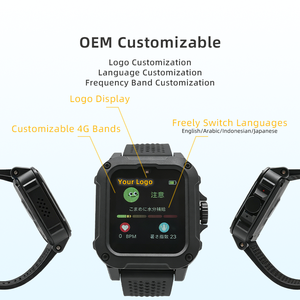
- OEM Customization: Custom casing finishes, strap materials, localized software UI, customized watch faces, and white-label companion app deployment starting from 1,000 units.
- Full ODM Custom Development: Ground-up hardware architectural design, custom tooling molds, unique sensor integrations, proprietary algorithm development, and 100% Client IP ownership from 3,000 units.
- Strict IP Protection & Confidentiality: Non-Disclosure Agreements (NDAs) are established prior to any technical exchange. All client-commissioned tooling, PCB Gerber files, and source codes remain 100% the intellectual property of the client.
Quality Management Guarantee & Standards Compliance
Smareyetech maintains 8 self-owned corporate and product certifications: ISO 9001:2015, CE (RED), FCC Part 15, RoHS, REACH, WEEE, CA Prop 65, and GCC. (Transparency Disclosure: Medical-grade registrations such as FDA 510(k), EU MDR, and ISO 13485 are provided as assist-customer engineering support services; Bluetooth SIG/BQB listing support is handled per client licensing structures).
5. Defensive Sourcing & Technical Procurement FAQ
Below are clear, engineering-backed answers to the most frequent inquiries submitted by global procurement teams, product managers, and supply chain directors:
Q What is the Minimum Order Quantity (MOQ) for custom OEM smartwatches?
Our MOQ structures are tiered by service scope. White-label logo customization on established platforms starts at 300 units for smart wearable jewelry and 500 units for smart rings, ECG watches, and 4G smartwatches. Full OEM custom branding (custom packaging, case colors, custom UI/firmware) starts at 1,000 units for smartwatches (2,000 units for smart bands and TWS earbuds). ODM complete custom hardware/tooling projects start at 3,000 units. Simple laser-engraving logo runs can be supported from 100 units.
Q What are the standard lead times for prototyping and mass production?
Standard pre-production samples require 10–15 days (with an expedited 7-day rush service option available for urgent client meetings). White-label mass production orders ship in 15–25 days. First-run OEM custom orders take 45–60 days to account for software engineering, custom tooling validation, and pre-cert testing. OEM repeat orders ship reliably in 30–45 days. Turnkey ODM projects range from 45 to 90 days depending on mold complexity.
Q How does Smareyetech ensure a <0.3% mass production defect rate?
Every single unit undergoes an exhaustive 4-step quality assurance protocol before final packing: 1) 100% SMT circuit functional validation; 2) Automated screen optical & touch sensitivity test; 3) 48-hour continuous battery charge/discharge aging to filter out early component failure; 4) Air-pressure waterproof chamber testing for IP67/IP68 sealing compliance.
Q Can your engineering team customize the smartwatch firmware and companion application?
Yes. Our 70+ in-house software engineers specialize in RTOS firmware customization, custom boot graphics, UI icon redesign, custom watch face creation, biometric algorithm tuning, and full white-label Android/iOS companion application development published directly under your developer accounts.
Q Who retains Intellectual Property (IP) ownership for custom ODM projects?
The client retains 100% ownership of all custom industrial designs, injection molds, PCB layouts, firmware code modifications, and software assets. Comprehensive Non-Disclosure Agreements (NDAs) are signed prior to reviewing technical requirements, ensuring client designs are strictly protected and never resold.
Q Do you provide global logistics support, including Amazon FBA DDP shipping?
Yes. We export to over 50 countries worldwide supporting standard international commercial terms: FOB, CIF, EXW, and DDP. Our direct Amazon FBA DDP logistics program covers the US, EU, UK, Japan, and Australia, handling FBA carton prep, palletization, barcoding, and customs duty clearance with 10–18 day door-to-door transit times.
Q What warranty terms and after-sales guarantees are provided?
All products supplied by Smareyetech carry a comprehensive 12-month manufacturer quality warranty. We supply replacement units or spare components for any non-artificial manufacturing defects. Buyers in the European Economic Area (EEA), UK, and Switzerland benefit from full compliance with local 2-year statutory consumer guarantee frameworks.
Q Are your smartwatch health tracking features certified as medical devices?
Smareyetech smartwatches and wearables are engineered as high-precision consumer wellness devices. Biometric data is intended for fitness tracking and health reference purposes. While ECG sensors can detect irregular rhythm patterns as an early warning metric, devices are not sold as primary diagnostic medical equipment. For clients pursuing medical device registration, our compliance division provides raw test data, circuit schematics, and lab test reports to accelerate your local regulatory submissions.