Featured OEM Hardware & Connected IoT Platforms
Leveraging shared automotive-grade SMT infrastructure, precision surface-mount technology, and multi-sensor firmware integration across our production facilities.

ChongxinIOT Smart Pet Companion Robot AI Camera 360° Mobile Monitor Auto Return Dock 10000mAh Battery Pet Care Companion Robot
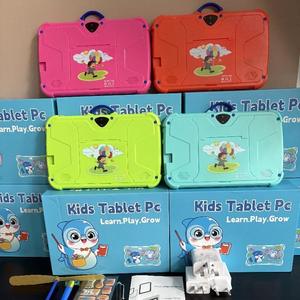
Wholesale 7-Inch Custom Kids Tablet for Children 1GB RAM 16GB ROM Android 8 Capacitive Child-Friendly Educational Eye New
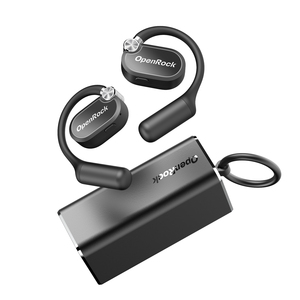
Open Ear Sports Earbuds with Strong Bass IPX5 Waterproof Earbuds Long Playtime Wireless Earbuds Customized Fit Customized APP
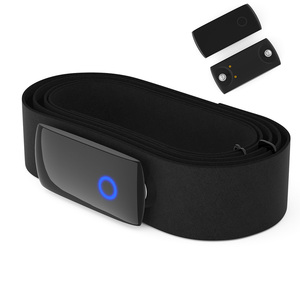
Smart Beat Flexible Heart Rate Chest Monitor Strap Ant+ bluetooth for Cycling Running Smart Belt Chest Heart Rate Monitor
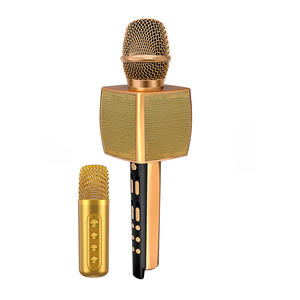
YS98 Family KTV Stereo Dual Wireless Mic Big Watts Sound 10W Karaoke Microphone

Smart AI Pet Robot with HD Camera Laser Toy Interactive Companion for Cats Dogs Home Monitoring
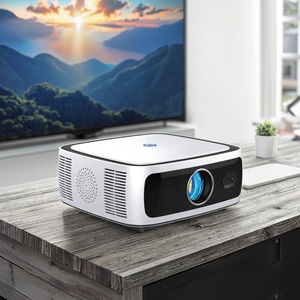
OEM ODM Portable Mini LED Video Android Home Theater Projector 4K LCD 1080P Full HD Auto Focus Smart Pocket Projector
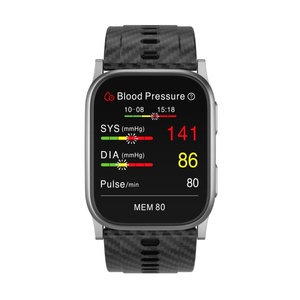
Approved Bluetooh Wearable Medical Grade Connected Body Temperature Blood Pressure Oxygen Heart Rate Smart Watch
Architecting Modern Automotive Telematics: Custom OEM OBD-II GPS Solutions
Empowering commercial fleet management operators, telematics service providers (TSPs), auto insurers (UBI), and automotive original equipment distributors with tailor-made OBD tracking hardware.
In the rapidly evolving telematics ecosystem, off-the-shelf tracking hardware often fails to satisfy specialized B2B deployment criteria. Modern vehicle fleet operations demand high-frequency CAN-bus data sniffing, zero-latency diagnostic trouble code (DTC) extraction, robust cyber-secure transmission, and flexible firmware protocols capable of interfacing seamlessly with proprietary cloud platforms. As a premier Custom OEM OBD GPS Tracker Factory & Supplier headquartered in Shenzhen's tech innovation core, Shenzhen Smareyetech Technology Co., Ltd. provides end-to-end hardware development, embedded firmware customization, and high-volume SMT manufacturing tailored precisely to institutional procurement mandates.
Operating out of our ISO 9001:2015-certified 10,000+ square meter manufacturing complex, our engineering group integrates complete hardware life-cycle services—from initial circuit schematics design and PCB layout to housing injection tooling, multi-constellation GNSS calibration, and comprehensive regional radio frequency (RF) compliance certifications. Whether your project requires an ultra-compact OBD-II plug-and-play tracker for Usage-Based Insurance (UBI) or a heavy-duty CAN-bus telemetry gateway supporting SAE J1939 and electric vehicle (EV) state-of-charge (SoC) decoding, our factory delivers industrial reliability backed by an industry-leading mass production defect rate under 0.3%.
CAN-Bus Protocol Decoding
Native parsing for ISO 15765-4, SAE J1939, ISO 11898, K-Line, and custom EV CAN telemetry. Reads mileage, fuel consumption, RPM, throttle position, and engine DTC codes in real time.
Multi-Constellation GNSS
High-sensitivity u-blox / STMicroelectronics GNSS modules supporting concurrent GPS, GLONASS, Galileo, and BeiDou tracking with integrated high-gain ceramic patch antennas.
Automotive Voltage Protection
Wide operating input range (9V–36V DC) with transient voltage suppression (TVS) diodes, overvoltage cutoff, and anti-reverse polarity safeguards engineered for harsh vehicle power spikes.
Future Procurement Trends in Automotive Telematics (2025–2030)
Understanding key technology transitions is essential for procurement officers to prevent hardware obsolescence and maintain competitive Total Cost of Ownership (TCO).
The global telematics hardware procurement landscape is undergoing a monumental shift driven by cellular network sunsets, electric vehicle proliferation, and stringent data security regulations. Enterprise procurement leaders must evaluate five mission-critical technology vectors when specifying OEM OBD GPS tracker architectures:
1. Sunset of 2G/3G & Migration to 4G LTE Cat-1 / 5G RedCap
With legacy 2G and 3G network shutdowns accelerating across North America, Europe, and Asia-Pacific, strategic procurement requires migrating directly to LTE Cat-1 (bis) or 5G RedCap (Reduced Capability). LTE Cat-1 offers optimal bandwidth for voice monitoring and firmware over-the-air (FOTA) updates while preserving ultra-low power consumption and reducing chip silicon costs.
2. Electric Vehicle (EV) Proprietary Protocol Decoding
Internal combustion engine (ICE) standard OBD PIDs are insufficient for modern commercial EV fleets. Sourcing trends prioritize OEM factories capable of custom reverse engineering and firmware integration for EV-specific CAN data—including High-Voltage Battery State-of-Health (SoH), State-of-Charge (SoC), thermal runaway detection, and charging station handshakes.
3. Edge AI & Driver Behavior Telematics
Modern fleets require hardware-level edge computing to analyze raw 6-axis MEMS accelerometer and gyroscope data directly on the device. Instantaneous local calculation of harsh braking, aggressive cornering, rapid acceleration, impact crashes, and vehicle rollover minimizes cellular data transmission overhead while enabling instant emergency alerts.
4. BLE 5.2 Sensor Ecosystem Expansion
OBD trackers are transforming into wireless IoT gateways. Integrating Bluetooth Low Energy (BLE 5.2) enables seamless connection to wireless tire pressure monitoring systems (TPMS), wireless door sensors, temperature probes for cold-chain logistics, and driver ID beacons without routing expensive physical wiring harnesses.
OEM OBD GPS Tracker Platform Comparison Matrix
Standard platform configurations available for OEM customization, fast prototyping, and mass production tooling.
| Platform Category | Cellular & GNSS Chipset | Supported CAN Protocols | Backup Battery | Primary Target Applications | OEM MOQ |
|---|---|---|---|---|---|
| Compact UBI OBD-II Tracker | LTE Cat-1 / GNSS u-blox M10 | ISO 15765-4, K-Line, CAN 2.0B | 80mAh Li-Po (Tamper Alert) | Usage-Based Insurance, Auto Finance, Rental Fleets | 500 Units |
| Commercial Fleet OBD Gateway | LTE Cat-1 + BLE 5.2 / Dual GNSS | ISO 15765-4, SAE J1939, J1850 VPW | 140mAh High-Temp Li-Po | Light Commercial Vehicles, Delivery Fleets, Logistics | 1,000 Units |
| Heavy Duty & EV Diagnostic Hub | LTE Cat-1 / 5G RedCap / Wi-Fi Sync | J1939, ISO 11898, EV CAN (SoC/SoH) | 250mAh Industrial Rechargeable | Heavy Trucks, Electric Fleets, Cold-Chain Transport | 1,000 Units |
| Plug & Play Asset Pass-Through | LTE Cat-M1 / NB-IoT / BLE Mesh | Standard OBD-II Diagnostic PIDs | 100mAh Li-Po | Passenger Car Monitoring, Car Sharing, Dealerships | 500 Units |
Why Global Procurement Teams Partner With Smareyetech
A single accountable original design and manufacturing (ODM/OEM) factory operating under rigorous quality control standards in Shenzhen, China.
10,000+ Sqm Production Base
Fully equipped facility featuring 8+ high-speed Yamaha and Panasonic SMT assembly lines, automated optical inspection (AOI), ultrasonic plastic welding, and dedicated aging chambers.
70+ In-House R&D Engineers
Full-stack hardware engineering capability covering RF antenna tuning, PCB multi-layer routing, embedded C firmware, CAN protocol reverse engineering, and custom mobile app/SDK development.
Rigorous 4-Step Quality Control
100% automated functional testing, high-voltage surge stress testing, 48-hour burn-in aging, and simulated automotive vibration testing ensure a defect rate strictly below 0.3%.
100% Client Intellectual Property Protection
We execute enforceable non-disclosure agreements (NDAs) prior to any engineering discussion. Custom schematics, enclosure tooling molds, and firmware source codes remain 100% client property.
Frequently Asked Questions (FAQ)
Direct technical and commercial answers compiled by our senior hardware engineering and supply chain managers.
1. What is the minimum order quantity (MOQ) for custom OEM OBD GPS tracker orders?
2. Can your engineers customize CAN-bus protocols for proprietary or non-standard vehicle models?
3. Which international certifications do your trackers hold for global market entry?
4. How does the factory handle Firmware Over-The-Air (FOTA) updates for mass deployments?
5. What is the typical lead time for prototype samples and mass production runs?
6. How does your OBD hardware prevent vehicle battery drain during extended parking?
7. Can your OBD trackers stream data directly to our self-hosted cloud platform?
8. What warranty and post-sales technical support policy do you offer?
9. Do you offer Amazon FBA or DDP (Delivered Duty Paid) global shipping services?
10. What protection features are built in against physical device tampering or unplugging?
Ready to Build Your Custom OEM OBD Telematics Platform?
Consult directly with our Shenzhen senior hardware team. Receive a comprehensive BOM analysis, platform recommendation, and factory direct quotation within 24 hours.
Contact Us