Featured Hardware & AI Device Matrix
Explore our flagship OEM/ODM smart wearable and electronic device platforms produced in our ISO 9001:2015 certified Shenzhen facility.
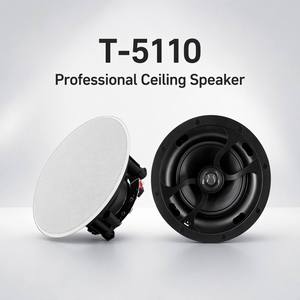
Wi-Fi Ceiling Speaker, Suitable for Apartments, Offices, Bars & Shops, Magnetic Grille, Customizable Bluetooth Connection
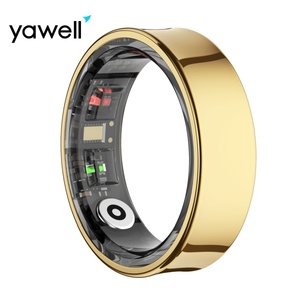
Yawell Manufacturer OEM ODM Gesture Smart Rings 5ATM Waterproof Thin Fitness Tracker Smart Health Ring R09 Mens Smart Ring
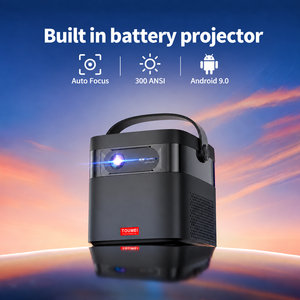
Customizable DLP Portable Projector LOGO With Built-in Battery 1080P Smart Android For Home Theater Projector
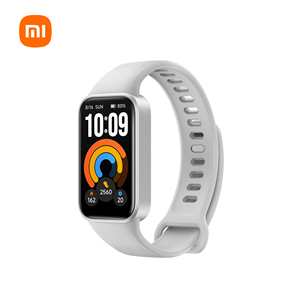
For Smart Band 11 Active 1.47 Inch TFT Display 60Hz 300mAh Battery 5ATM Waterproof Android GPS Health Tracking Sports Band
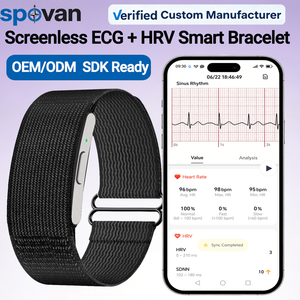
Screenless Smart Bracelets ECG HRV Monitor Fitness Band Tracker Without Screen With Digital Detox Design And SDK API For OEM ODM
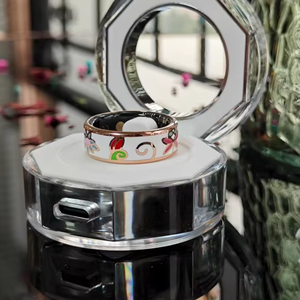
Smart Health Ring Stainless Steel Waterproof Sleep Heart Rate Tracker Fashion Intelligent Jewelry Android IOS 7-15 Days Battery
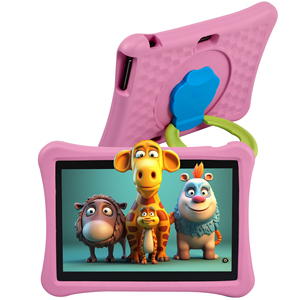
10 Inch MTK6737 Android Kids Tablet for Children Parental Control 3GB ROM 32GB Storage Tablet Pc with EVA Shockproof Case
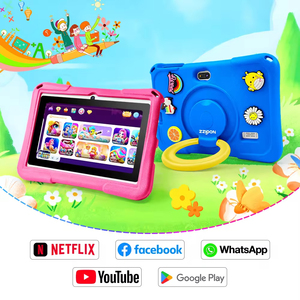
New 7 Inch Kids Tablet Android 14 4GB RAM MTK Dual Core Wi-Fi Rugged Educational NFC Pad for Children
Sourcing Executive Summary: China's Pocket AI Translator Ecosystem
The global demand for real-time, pocket-sized AI voice and optical translation hardware has entered an unprecedented growth phase. Driven by international business travel, cross-border commerce, emergency medical services, and educational immersion, procurement teams from global consumer electronics brands, telecom operators, and institutional buyers are increasingly turning to China—specifically Shenzhen—to identify tier-1 manufacturing partners. As a leading specialized manufacturer established with deep engineering roots since 2010, Shenzhen Smareyetech Technology Co., Ltd. provides this comprehensive technical whitepaper to guide global procurement managers through the critical evaluation criteria, architectural frameworks, and manufacturing benchmarks of premium pocket AI translators.
Modern pocket AI translators are no longer simple voice-recording dongles running basic dictionary lookups. Today's commercial-grade translation devices represent sophisticated multi-modal edge-computing hubs. They combine high-performance System-on-Chips (SoCs), integrated Neural Processing Units (NPUs) running local Large Language Models (LLMs), multi-microphone beamforming arrays with DSP noise cancellation, global cellular eSIM modems, and high-resolution optical character recognition (OCR) camera engines.
Key Procurement Insight: Premium pocket AI translation hardware requires a synchronized balance between low-latency hardware decoding, dual-engine (cloud + edge) machine translation switching, and robust industrial assembly to maintain operational stability across diverse radio frequencies and acoustic environments worldwide.
Hardware Architecture & System Engineering Specs
When selecting a pocket AI translator OEM/ODM exporter in China, technical buyers must scrutinize the underlying silicon platform and electro-acoustic assembly. Below is an engineering analysis of our standardized hardware design architecture deployed across commercial-grade AI translation devices:
Multi-Core Edge AI SoC
Utilizing high-efficiency quad-core ARM Cortex-A53 or RK3566 application processors paired with dedicated 1.0 TOPS NPUs to run offline translation algorithms at sub-200ms processing latencies without cloud dependency.
Far-Field Acoustic Beamforming
Dual or quad-MEMS microphone arrays engineered with active DSP sound cancellation, adaptive noise suppression (up to 85dB ambient attenuation), and 3-meter voice pickup accuracy.
Global Cellular & eSIM Provisioning
Integrated global 4G LTE-M / 3G frequency band support paired with virtual eSIM cloud data access across 150+ countries, ensuring uninterrupted connection without physical SIM swaps.
Multi-Modal Camera OCR Engine
Integrated 5MP to 13MP auto-focus camera modules optimized for document scanning, street signs, and restaurant menus across 56 offline and 138 online languages.
| Architecture Component | Industrial OEM Standard Standard | Advanced ODM Customization Option |
|---|---|---|
| Main Processor (SoC) | Quad-core ARM Cortex 1.5GHz | Octa-core 2.0GHz with 2.0 TOPS NPU |
| Translation Engines | Hybrid (Cloud APIs + 16 Offline NMTs) | Custom LLM fine-tuning (Medical/Legal/Biz) |
| Acoustic Hardware | Dual MEMS Mics + 2W High-Clarity Speaker | Quad-Mic Array + Smart PA Audio Amplifier |
| Connectivity | Wi-Fi 802.11 b/g/n + BLE 5.0 | Global 4G LTE eSIM + Wi-Fi 6 + BLE 5.3 |
| Display & Touch | 2.8"–4.0" IPS Capacitive Touchscreen | AMOLED Ultra-Narrow Bezel Curved Display |
| Battery & Thermal | 1500mAh–2000mAh Lithium-Polymer (8h active) | 3000mAh High-Density Cell + QC Fast Charge |
Product Development Trends & Next-Gen Technology Roadmaps
As semantic search and generative AI algorithms mature, the landscape for pocket translation devices is undergoing a structural paradigm shift. Sourcing directors must anticipate technological trajectories to avoid hardware obsolescence within 18-month retail lifecycles. Our engineering team at Smareyetech identifies four dominant trends shaping the future of pocket AI translators:
1. On-Device Generative LLM Integration (Edge Intelligence)
Traditional translation engines rely on word-for-word Neural Machine Translation (NMT). Next-generation pocket AI translators integrate compressed, quantized Large Language Models directly into local device storage (16GB/32GB eMMC). This enables context-aware translation, conversational summarization, tone modification (formal business vs. casual), and real-time idiom deciphering without transmitting sensitive audio payloads over public cloud networks.
2. Multi-Modal Vision & AR Interface Convergence
Voice-only interfaces are giving way to integrated visual processing. Advanced pocket translators feature high-frame-rate image processors with specialized optical macros, enabling instant menu, contract, and technical schematic translation. Furthermore, bluetooth pairing protocols allow these pocket devices to stream heads-up translation text directly to open-ear AI smart glasses and smart wristwear platforms.
3. Domain-Specific Neural Dictionaries for Enterprise B2B
Global buyers in specialized verticals—such as maritime logistics, international arbitration, cross-border healthcare, and heavy equipment manufacturing—require zero translation error rates. Modern OEM platforms support custom firmware flashed with domain-specific terminology banks, ensuring industry-standard phraseology is maintained during high-stakes business discussions.
4. Zero-Trust Hardware-Level Data Security
Data privacy regulations including the European Union's GDPR, US CCPA, and global ISO/IEC 27001 standards have made encrypted local data handling paramount. Next-gen translators feature hardware root-of-trust (RoT) chips, encrypted memory storage, and automatic audio wiping routines to guarantee that proprietary corporate dialogue is never cached or leaked.
Future Procurement Trends & Supply Chain Strategies (2025–2030)
Managing supply chain resilience and cost efficiency requires a clear understanding of manufacturing economics in China's hardware hubs. When sourcing pocket AI translators, leading international brands are executing three major procurement strategies:
- Modular PCB Platform Sourcing: Instead of tooling new hardware enclosures for every SKU, enterprise buyers utilize standardized, pre-certified PCB motherboards. This strategy reduces initial R&D tooling costs by up to 60% and slashes time-to-market from 9 months down to 45 days.
- Over-The-Air (OTA) Software Licensing Models: Hardware buyers are pairing base-tier devices with tier-based cloud translation subscriptions. Exporters provide white-label OTA update servers, allowing brands to monetize ongoing software updates, specialized language pack unlocks, and enterprise VPN connections post-sale.
- Diversified Product Portfolio Ecosystems: Modern procurement contracts rarely focus on a single isolated device. Sourcing teams bundle pocket AI translators alongside complementary smart hardware—including smart rings, fitness wearables, educational tablets, and spatial audio systems—to maximize freight consolidation and volume rebates.
Smareyetech Enterprise Capabilities & Manufacturing Strengths
Headquartered in the high-tech industrial center of Shenzhen, Shenzhen Smareyetech Technology Co., Ltd. has operated as an authorized OEM/ODM manufacturer of smartwatches, smart bands, smart rings, AI glasses, and smart electronic devices since 2010 (incorporated in 2013). Our factory serves as a trusted supply chain partner for brand owners, importers, distributors, and global retail chains in over 50 countries.
Smareyetech Assurance: We maintain an industry-leading mass-production defect rate of under 0.3%—drastically outperforming the typical factory average of 2.0% to 5.0%. Every production run passes through our rigorous 4-step quality control protocol.
Our Manufacturing Infrastructure & Technical Assets
- 10,000+ Sqm State-of-the-Art Facility: Housing automated SMT placement lines, dust-free optical assembly rooms, ultrasonic shell welding units, and automated aging test racks.
- 70+ In-House R&D Engineers: Specialized in embedded Linux/Android kernel tuning, BLE/RF antenna design, acoustic enclosure engineering, and custom companion mobile app development (iOS & Android).
- 30+ Technical Patents & IP Protection: We guarantee 100% intellectual property ownership for all client ODM custom molds, UI artwork, and firmware assets under strict legally binding NDAs.
- Comprehensive Quality Control Protocol: Every batch undergoes: (1) 100% Functional & Sensor Calibration, (2) Display & Optical Touch Inspection, (3) 48-Hour Battery & Thermal Stress Aging, and (4) IP Air-Pressure Sealing Validation.
Factory Certification & Compliance Matrix
To ensure frictionless customs clearance and market compliance across North America, Europe, the Middle East, and Asia-Pacific, our facility and products hold 8 core self-owned international certifications:
| Certification standard | Regulatory Scope & Target Markets | Compliance Status |
|---|---|---|
| ISO 9001:2015 | Global Quality Management System Standards | Certified Factory Direct |
| CE (RED) | Radio Equipment Directive for European Union Entry | Full Documentation Held |
| FCC Part 15 | Federal Communications Commission (USA RF Compliance) | Full Documentation Held |
| RoHS & REACH | Hazardous Substances & Chemical Safety (EU Directive) | Full Test Reports Passed |
| WEEE Directive | Waste Electrical and Electronic Equipment Compliance | Compliant Packaging Marks |
| CA Prop 65 & GCC | California Material Safety & Gulf Cooperation Council | Verified Compliant |
Transparency Note: Specialized medical registration filings such as FDA 510(k), EU MDR, and ISO 13485 represent customer-assist compliance services; we provide full technical construction files, laboratory test reports, and factory auditing access to support client filings.
Frequently Asked B2B Sourcing Questions
Get immediate, transparent answers to key procurement, manufacturing, and operational questions regarding pocket AI translators and OEM hardware production.
What is the Minimum Order Quantity (MOQ) for OEM/ODM pocket AI translator projects?
We offer flexible MOQ structures depending on customization depth. Logo-only laser engraving starts at 100 units. White-label custom packaging and basic branding start at 300 to 500 units. Full OEM custom branding (customized UI, boot logos, custom colors, and white-label apps) starts at 1,000 units. Deep ODM projects involving brand-new industrial molds and custom PCB engineering start at 3,000 units.
What are the typical lead times for sample prototyping and mass production?
Standard evaluation samples take 10 to 15 days (with a 7-day rush program available for verified clients). White-label mass production orders are completed within 15 to 25 days. Initial OEM custom orders—including software flashing, customized packaging, and pre-shipment testing—take 45 to 60 days. Repeat OEM orders are delivered in 30 to 45 days.
Can your R&D engineering team integrate custom translation APIs or SDKs into the firmware?
Yes. Our team of 70+ embedded software engineers can integrate specialized third-party cloud APIs (such as Google Cloud Translate, Microsoft Azure Cognitive Services, DeepL, or custom private enterprise translation LLMs) directly into the device's Android/Linux OS kernel. We also supply complete SDKs and APIs for custom mobile companion apps.
How do you guarantee quality control and maintain a sub-0.3% defect rate?
Every batch produced in our 10,000+ sqm Shenzhen facility undergoes a rigorous 4-step quality assurance process: (1) 100% automated functional audio, mic, and RF signal testing, (2) optical display and touch panel screening, (3) 48-hour continuous battery charge/discharge thermal aging, and (4) IP pressure sealing testing. This strict procedure keeps our standard defect rate below 0.3%.
Who owns the Intellectual Property (IP) for custom ODM hardware and software developments?
100% of the Intellectual Property (IP) for custom industrial designs, tooling molds, proprietary PCB schematics, and app software created under an ODM agreement belongs exclusively to the client. We sign strict Non-Disclosure Agreements (NDAs) prior to receiving project briefs and never replicate or sell client designs to third parties.
Do you support global shipping logistics, customs clearance, and Amazon FBA fulfillment?
Yes. We export to over 50 countries under FOB, CIF, EXW, and DDP (Delivered Duty Paid) terms. Our specialized Amazon FBA DDP logistics service covers the United States, European Union, United Kingdom, Japan, and Australia. We manage all FBA product labeling, palletizing, customs clearance, and import duty payments with average transit times of 10 to 18 days.
What warranty and post-sales technical support do you provide to international buyers?
All Smareyetech hardware products carry a comprehensive 12-month manufacturer quality warranty. We supply 1% to 2% spare unit allocations or replacement components for bulk orders, alongside multi-language technical documentation and dedicated engineering after-sales support. Buyers in the European Economic Area (EEA) and UK are fully supported under regional statutory warranty requirements.