High-Performance Mini Portable Projectors for Wholesale
Explore our flagship OEM/ODM portable projection units engineered with sealed dust-proof optical paths, smart OS integration, and high-ANSI lumen engines.
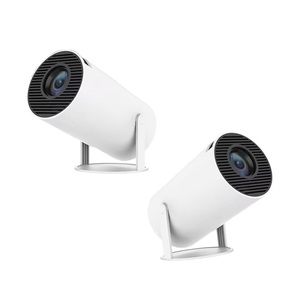
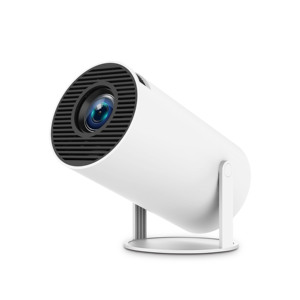
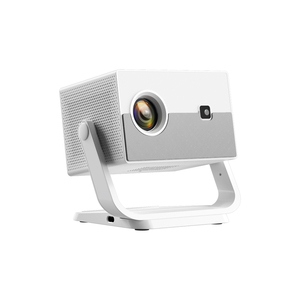
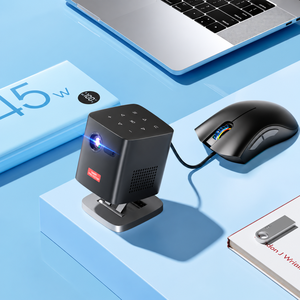
Navigating China’s Portable Projection Manufacturing Landscape
A comprehensive analysis of light engine architectures, thermal dynamics, and optical assembly standards defining modern smart micro-projectors.
Single LCD Optical Engines
Widely adopted for cost-effective consumer models. Modern iterations feature fully enclosed light paths with active internal cooling fans to eliminate dust spots and extend LED chip lifespan up to 30,000 operating hours.
DLP (Digital Light Processing)
Utilizing Texas Instruments DMD micromirror chips, DLP micro-projectors deliver compact form factors, ultra-high contrast ratios (up to 5000:1), and zero optical decay—ideal for premium outdoor and business pocket projectors.
Smart OS & SOC Integration
Equipped with high-performance quad-core ARM Cortex Processors, integrated Android 11.0 / Linux operating systems, and hardware-level 4K video decoding, enabling direct app streaming without external dongles.
Key Technological Trends Reshaping Portable Projection
Stay ahead of market demand by understanding the next generation of smart optical features sought by retail buyers and enterprise distributors.
1. TOF Sensing & AI Intelligent Screen Adaptation
Manual keystone adjustment and focus wheels are rapidly becoming obsolete. Next-gen mini projectors embed Time-of-Flight (TOF) laser distance sensors and high-resolution CMOS cameras paired with neural processing algorithms. This facilitates instant auto-focus in under 1.5 seconds, seamless 6D omnidirectional auto-keystone correction, intelligent obstacle avoidance (automatically resizing projections around wall sockets or picture frames), and precise screen edge alignment.
2. Wi-Fi 6 & Two-Way Bluetooth 5.4 Connectivity
As 4K streaming and low-latency cloud gaming proliferate, wireless bandwidth is paramount. Integrating Wi-Fi 6 (802.11ax) modules reduces latency to under 20ms, preventing audio-video sync delays during smartphone screen mirroring. Furthermore, bidirectional Bluetooth 5.4 allows projectors to function dual-purpose: either outputting audio to premium external soundbars or operating as an independent Bluetooth Hi-Fi speaker system when the optical light path is powered off.
3. Enclosed Dust-Proof Optical Path (IP5X Architecture)
Historical single-LCD projectors suffered from dust accumulation on the inner LCD panel, resulting in black spots and heat degradation over time. Leading Chinese manufacturers now lead the market with 100% sealed optical engines. Utilizing internal circulation cooling channels and precision heat-pipe dissipation, these engines completely isolate optical elements from ambient dust, reducing RMA warranty returns by up to 85%.
4. Hybrid Light Sources & Ultra-Short Throw (UST) Miniaturization
While traditional LED light sources dominate the budget segment, dual-light technology (combining RGB Lasers and high-lumens LEDs) is entering portable form factors. This innovation overcomes brightness bottlenecks—delivering true 800+ ANSI lumens in pocket-sized enclosures while maintaining accurate color gamut reproduction (>110% Rec.709). Ultra-Short Throw (UST) lenses are also being adapted to project 100-inch images from distances under 25cm.
Strategic OEM/ODM Sourcing & Quality Control Benchmarks
Key considerations for B2B buyers, Amazon FBA sellers, and regional electronics distributors when auditing China projector factories.
| Procurement Metric | Industry Standard Average | Smareyetech Factory SLA Benchmark | Buyer Advantage |
|---|---|---|---|
| Mass Defect Rate (RMA) | 2.0% – 5.0% | < 0.3% Verified | Eliminates post-sale return costs and protects brand reputation. |
| Optical Lumen Testing | Estimated Source Lumens | Standard ANSI Lumens (ISO 21118) | Provides true, non-inflated brightness metrics for honest marketing. |
| Sample Lead Time | 20 – 30 Days | 10 – 15 Days (7-Day Rush Available) | Accelerates time-to-market and rapid customer testing. |
| Product Certifications | Basic CE / FCC only | CE (RED), FCC Part 15, RoHS, REACH, WEEE | Seamless custom clearance across EU, US, UK, and Middle East. |
| IP & Mold Protection | Shared tooling risks | 100% Client-Owned Intellectual Property | Strict NDA execution ensuring custom designs are never resold. |
Why Partner with Shenzhen Smareyetech Technology Co., Ltd.
Combining 16 years of hardware engineering expertise with integrated manufacturing facilities to power your private-label hardware success.
Full OEM/ODM Customization
From customized industrial exterior tooling, customized colorways, and silk-screened brand logos, to customized Android firmware (boot animations, pre-installed streaming APPs, custom UI launchers, and unique software settings).
4-Step Quality Assurance
Every single manufactured unit undergoes rigorous 4-step testing: full sensor & audio functional verification, high-resolution optical display check for dead pixels, 48-hour continuous thermal & battery aging, and vibration drop resilience testing.
Global Logistics & FBA Ready
We support flexible international trade terms including FOB, CIF, EXW, and DDP (Delivered Duty Paid). Our experienced logistics desk specializes in direct Amazon FBA warehouse fulfillment with prep, labeling, and palletizing included.
Our Streamlined OEM/ODM Collaboration Process
Consultation & NDA
Requirements alignment, target price evaluation, and NDA execution.
Rapid Prototyping
Sample engineering, customized software build, and physical testing (10-15 days).
Trial & Mass Production
SMT component placement, optical assembly in cleanroom, and 48h aging.
QC & Global Dispatch
Final AQL inspection, export packaging, and fast DDP/FOB shipping.
Frequently Asked Questions for Projector Procurement
Everything you need to know regarding minimum order quantities, customization, compliance, and international shipping options.
What is the Minimum Order Quantity (MOQ) for custom OEM orders?
Our OEM custom branding program (custom logo printing, customized gift box, and branded manual) starts at 500 to 1,000 units depending on the projector chassis. For white-label orders of existing standard models, MOQ starts as low as 100 units. Full ODM custom mold developments require an MOQ of 3,000 units.
Can you customize the Android OS firmware and boot UI logo?
Yes. Our in-house software engineering team can flash custom Android firmware images. We support customized boot logos/animations, tailored home screen UI layouts, pre-installing designated client applications, and locking specific settings for commercial display or hotel installations.
How do you guarantee ANSI brightness ratings and image quality?
Every optical engine design is benchmarked using standardized 9-point ANSI lumen measurement specs (ISO 21118 standards). We explicitly differentiate between raw LED source lumens and real ANSI lumens to ensure truthful product specifications for our wholesale partners.
What certifications are available for international customs clearance?
Our facility holds ISO 9001:2015 certification. Our projector models carry complete self-owned certification files for major export markets, including CE (RED), FCC Part 15, RoHS, REACH, WEEE, and CA Prop 65 compliance reports.
What is the lead time for sample delivery and mass production?
Standard customized engineering samples take 10 to 15 days (with a 7-day rush service option available for urgent client meetings). Mass production lead time for initial OEM orders is 35 to 45 days, while repeat OEM orders are completed within 25 to 30 days.
How are warranty and post-sale technical support handled?
We provide a 12-month factory quality warranty on all hardware components, including optical engine units. In addition, we supply 1% spare units/parts for high-volume orders and provide direct remote support from our software engineering staff for firmware updates.
Ready to Expand Your Projector Product Line?
Contact our engineering desk today to receive full technical specifications, OEM pricing matrices, and factory audit reports within 24 hours.