Featured Smart Hardware & Connected Platforms
Direct OEM/ODM hardware platforms engineered for global importers, brand owners, and IoT system integrators.

Smart AI Pet Robot with HD Camera Laser Toy Interactive Companion for Cats Dogs Home Monitoring
Autonomous navigation pet companion featuring 1080P HD optical sensor, laser tracking, real-time Wi-Fi/LTE telemetry, and remote mobile app interaction.
View Product Specs →
Amazo AI ChatGPT Pen Integration Voice Multi-Translator Students Android Operating System Smart Translator Scanner Pen IPS
Handheld AI OCR scan pen with integrated ChatGPT voice translation engine, high-speed neural processing unit, and IPS color touch interface.
View Product Specs →
Wi-Fi Ceiling Speaker, Suitable for Apartments, Offices, Bars & Shops, Magnetic Grille, Customizable Bluetooth Connection
Architectural audio system featuring dual Wi-Fi/Bluetooth 5.0 streaming, flush magnetic acoustic grille, and commercial multi-zone control capability.
View Product Specs →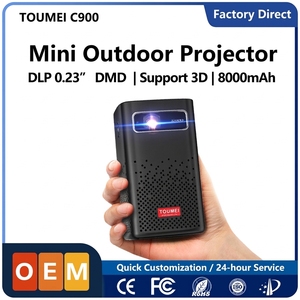
Customized Logo Projector Factory Portable DLP Projector With Battery Smart WiFi Projector Wholesale OEM ODM Supplier
Ultra-compact optical DLP engine with integrated lithium battery pack, dual-band Wi-Fi connectivity, and customizable Android OS interface.
View Product Specs →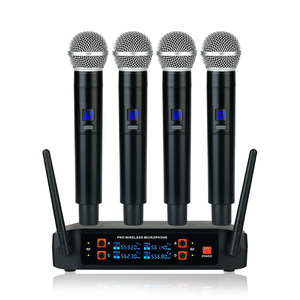
Wireless Microphone for Home Karaoke Conference & Performance-One Drag Four Model with 100Hz-20kHz Frequency Response 20km Range
Professional 1-to-4 wireless UHF audio transmission matrix, multi-channel frequency stability, extended operational range, and clear acoustic fidelity.
View Product Specs →
8G Intelligent Scanning Translation Pen 134 Languages Online Voice Offline Translator Dictionary Pen with Photo Translation
High-speed OCR scanner pen with 8GB internal storage, supporting 134 language neural translations, offline optical dictionary, and photo camera translation.
View Product Specs →
Elegant Solid AI Smart Animal Shape Wireless Stereo Audio 2W Grey Plush Bear Speaker Desktop APP Office Bedroom Daily
Novelty smart companion speaker featuring Bluetooth stereo driver, soft aesthetic casing, companion app connectivity, and ambient room voice playback.
View Product Specs →
Open-ear Bluetooth Headphones (OWS) with Ear-hook Design: Ultra-long Battery Life, High-definition Sound Quality HE-25
Next-generation Open Wearable Stereo (OWS) headset with directional acoustic delivery, ergonomic ear-hook security, and low-power Bluetooth 5.3 SoC.
View Product Specs →(Incorporated 2013)
1. Executive Summary & Global Sourcing Landscape for Mini GPS Trackers
The global demand for miniaturized GPS tracking devices across commercial asset tracking, fleet logistics, personal safety, pet monitoring, and micromobility has entered a period of rapid technological transformation. Driven by the worldwide sunsetting of legacy 2G and 3G cellular networks, enterprise procurement teams are shifting toward modern LTE Cat-1 bis, NB-IoT (Narrowband IoT), and LTE-M (eMTC) hardware platforms. As the primary hub of global electronics manufacturing, China accounts for over 85% of global cellular location-tracker exports.
However, navigating China's OEM/ODM manufacturing ecosystem requires evaluating suppliers beyond surface-level pricing. Selecting a top-tier manufacturer necessitates examining GNSS chipset integration, RF antenna design, power management efficiency, cellular carrier network approvals, and rigorous Quality Control (QC) frameworks. Leading Shenzhen manufacturers like Shenzhen Smareyetech Technology Co., Ltd. (operating since 2010) provide full-stack ODM capabilities, bridging hardware engineering, custom firmware development, and automated factory production under one roof.
Core Procurement Takeaway: Transitioning from standard white-label sourcing to customized OEM/ODM engineering ensures direct access to source code SDKs, lower overall failure rates (<0.3%), customized carrier APN settings, and 100% intellectual property ownership for custom molds and app assets.
Architectural Breakdown: Key Components of Micro GPS Trackers
A high-reliability micro location tracker integrates five fundamental hardware subsystems into an enclosure often smaller than a standard matchbox:
- GNSS Positioning Engine: Multi-constellation modules supporting GPS (USA), GLONASS (Russia), BDS/Beidou (China), Galileo (EU), and QZSS (Japan). High-sensitivity chipsets (e.g., u-blox M10 series or ASR/MediaTek SoCs) deliver Time-To-First-Fix (TTFF) under 1 second in hot-start conditions and -167 dBm tracking sensitivity.
- Cellular Baseband Modem: Low-power cellular chipsets configured for LTE Cat-1 bis (single-antenna cost-optimized LTE), NB-IoT, or 4G LTE sub-bands (B1/B3/B5/B7/B8/B20/B28 for EU/APAC; B2/B4/B5/B12/B13/B25/B26/B66 for Americas).
- Ultra-Low Power Microcontroller Unit (MCU): ARM Cortex-M4 or M33 cores operating dynamic power-sleep states (e.g., Deep Sleep < 5µA), executing local geo-fencing algorithms and buffering offline telemetry points into flash storage during network blackouts.
- Power Management IC (PMIC) & Energy Storage: High-density Lithium-Polymer or Li-SoCl2 (Lithium Thionyl Chloride) non-rechargeable battery arrays, combined with smart PMIC circuits handling over-charge, over-discharge, short-circuit, and thermal protection.
- Sensor Array & RF Antenna Array: 3-axis MEMS accelerometers for movement-triggered wake-up, active Hall-effect magnetic switches, ambient light tamper detection sensors, and custom-tuned LDS (Laser Direct Structuring) or FPC antennas for cellular and GNSS frequencies.
2. Multi-Sensor Fusion & Indoor/Outdoor Hybrid Positioning Systems
Pure GPS tracking suffers from severe attenuation inside urban canyons, indoor warehouses, underground parking garages, and covered transit hubs. Modern micro GPS trackers manufactured in China utilize multi-technology hybrid positioning stacks to achieve seamless indoor-to-outdoor location continuity:
Multi-Constellation GNSS
Simultaneous tracking of up to 40 satellite channels (GPS, BDS, GLONASS, Galileo) for sub-2.5m open-sky accuracy.
Wi-Fi MAC Address Sniffing
Scans ambient Wi-Fi BSSIDs without connecting to networks, resolving indoor location via global positioning databases (accuracy 10-30m).
LBS Cell Tower Triangulation
Fallback positioning utilizing Mobile Country Code (MCC), Mobile Network Code (MNC), and Cell ID (CID) when GNSS signals are blocked.
BLE 5.4 Beacon Tracking
Integrates Bluetooth Low Energy for micro-proximity tracking, tag-to-tracker pairing, and short-range indoor sensor telemetry.
Motion & Vibration Wake-up
3-axis accelerometer switches device from dynamic sleep (<5µA) to active reporting upon detecting motion, extending battery life by up to 400%.
Optical Light & Tamper Alerts
Light-dependent resistors (LDR) detect detachment or box opening, instantly transmitting high-priority tamper alerts to cloud servers.
3. Technology Platform Matrix: LTE Cat-1 bis vs. NB-IoT vs. 2G/3G
Selecting the appropriate cellular transmission protocol is crucial for balancing device footprint, global roaming compatibility, battery longevity, and recurring SIM data costs. The comparative matrix below outlines the key parameters evaluated by enterprise procurement engineering teams:
| Parameter | LTE Cat-1 bis (Recommended) | NB-IoT (Narrowband) | LTE-M (eMTC) | Legacy 2G / 3G |
|---|---|---|---|---|
| Peak Data Speed | DL 10 Mbps / UL 5 Mbps | DL ~127 kbps / UL ~158 kbps | DL ~1 Mbps / UL ~1 Mbps | DL 85.6 kbps / UL 42.8 kbps |
| Voice Support (VoLTE) | Yes (Full VoLTE Support) | No | Yes (Supported) | Yes (Native CS Voice) |
| Global Roaming | Excellent (Uses 4G Networks) | Limited (Requires Operator Agreements) | Moderate (US/EU Regional Focus) | Phase-out globally (Sunset) |
| Power Consumption | Low (PSM / eDRX enabled) | Ultra-Low (10+ Year Standby potential) | Very Low | High Peak Transmit Power |
| Hardware Module Cost | Economical (~$3.50–$5.00) | Low (~$2.50–$4.00) | Moderate (~$5.50–$8.00) | Obsolete / EOL |
| Primary Application | Asset, Vehicle, Pet, SOS Trackers | Static Utility Sensors & Smart Meters | Industrial Asset Logistics | Deprecated Systems |
4. Future Technology Trends & Product Innovation Roadmap (2025–2030)
As the IoT sector advances, next-generation mini GPS trackers are evolving from basic periodic pingers into intelligent edge-compute devices. Leading China manufacturers are embedding cutting-edge innovations into new OEM hardware platforms:
4.1 Direct-to-Cell Satellite NTN (Non-Terrestrial Networks)
Integrating 3GPP Release 17/18 Satellite NTN chipsets allows micro trackers to fall back to GEO/LEO satellite constellations (such as Skylo, Iridium, or Beidou Messaging) when cellular coverage is absent. This hybrid cellular-satellite redundancy guarantees 100% geographic coverage across oceans, deserts, and remote mountain zones for critical asset tracking.
4.2 AI on the Edge & Adaptive Tracking Algorithms
Rather than transmitting raw GPS data points at fixed intervals—which drains battery life—embedded TinyML (Machine Learning) models analyze movement signatures locally. The tracker dynamically adjusts its transmission rate: switching to high-frequency 1-second pings during active transit, and entering deep sleep when motionless, reducing cellular payloads by over 60%.
4.3 System-in-Package (SiP) Miniaturization & Solar Harvesting
Advanced SiP manufacturing integrates the MCU, baseband modem, power management, and memory into a single silicon die package measuring less than 10mm x 10mm. Paired with high-efficiency flexible indoor solar harvesting cells, future mini trackers are achieving perpetual zero-maintenance operational lifetimes.
4.4 Integrated eSIM (eUICC) & Dynamic Multi-IMSI Switching
Physical SIM card slots introduce mechanical failure points and vulnerability to water/dust ingress. Modern trackers utilize soldered MFF2 eSIM chips programmed with multi-IMSI profiles, enabling automatic over-the-air (OTA) switching to the strongest carrier signal anywhere in the world.
5. Enterprise Factory Capabilities & Rigorous Quality Control (Smareyetech Standard)
Headquartered in Shenzhen, China, Shenzhen Smareyetech Technology Co., Ltd. represents the standard of high-precision wearable and IoT hardware manufacturing. Spanning a 10,000+ square-meter manufacturing facility with 8 high-speed SMT lines, the factory provides end-to-end OEM and ODM engineering for top global brands.
The 4-Step Factory Quality Control Protocol
To deliver a mass-production defect rate consistently below 0.3% (compared to the 2%–5% industry standard), every production lot undergoes a four-stage quality verification process:
- Incoming Component & SMT Inspection (IQC): Automated Optical Inspection (AOI) and X-ray inspection of all BGA/GNSS chip solder joints to prevent cold-solder bridges or component misalignments.
- Automated RF & Functional Calibration (FQC): 100% automated testing in shielded wireless chambers to calibrate cellular TX/RX power, GNSS carrier-to-noise ratio (C/N0), and Bluetooth RSSI values.
- 48-Hour Active Battery Aging Test: Every assembled PCBA unit undergoes a continuous 48-hour charge/discharge aging cycle under voltage strain to eliminate early-life component failures.
- IP67/IP68 Waterproof Pressure Chamber Test: High-pressure pneumatic vacuum chamber testing verifies structural seals and acoustic membrane integrity, ensuring rugged real-world environmental resistance.
Certifications Held: ISO 9001:2015 Quality Management System, CE (RED), FCC Part 15, RoHS, REACH, WEEE, CA Prop 65, and GCC certifications. Complete technical documentation and test reports are supplied for global regulatory compliance.
6. B2B Sourcing Guide & Frequently Asked Questions (FAQ)
Clear, unvarnished responses to key questions asked by international procurement teams, supply chain directors, and product owners evaluating China GPS tracker suppliers:
What are the standard Minimum Order Quantities (MOQ) for custom GPS tracker production?
We offer tiered MOQ structures based on customization depth: White-Label branding (custom logo printing and packaging) starts at 300 to 500 units. Full OEM custom branding (custom firmware, housing colorways, custom boot logos, and dedicated companion app white-labeling) starts at 1,000 units. Full ODM hardware development (custom PCBA layout, new mechanical molds, and bespoke sensor arrays) starts at 3,000 units. Laser-etched logo branding on stock hardware is available from 100 units.
How are firmware updates and backend platform protocols (APIs) handled?
Our trackers support universal communication protocols including JT/T808, GT06, Concox, Wialon, and custom MQTT/HTTP JSON payloads. Firmware Over-The-Air (FOTA) updates are integrated natively into our software stack, allowing your engineering team to push remote software patches and feature updates to deployed hardware fleets seamlessly.
What is the production lead time for sample prototypes vs. mass production orders?
Standard branded evaluation samples require 10–15 business days (with a 7-day expedited option available). White-label mass production orders are completed within 15–25 days. Initial OEM custom orders typically require 45–60 days to complete tooling, prototyping, firmware validation, and regulatory compliance testing. Repeat OEM orders are delivered in 30–45 days.
Who owns the Intellectual Property (IP) of custom ODM projects?
Client IP rights are fully protected. 100% of the intellectual property rights for proprietary ODM hardware designs, mechanical molds, PCB schematics, and custom software code belong strictly to the client. Non-Disclosure Agreements (NDAs) are routinely executed prior to initial technical discussions.
How do you manage cellular network certifications (CE, FCC, PTCRB, Carrier Approvals)?
Our baseband platforms utilize core modules pre-certified for CE-RED, FCC Part 15/22/24, RoHS, and REACH. For custom hardware projects requiring carrier-specific approvals (such as AT&T, Verizon, T-Mobile, or Vodafone PTCRB certification), our in-house compliance team handles sample submission, laboratory testing coordination, and technical documentation packages.
What shipping options and Amazon FBA capabilities are available?
We export to over 50 countries via FOB, CIF, DDP (Delivered Duty Paid), and EXW terms. Our Amazon FBA DDP service covers the US, EU, UK, Japan, and Australia, providing complete custom barcode labeling, FBA carton prep, export documentation, and customs clearance with 10–18 day typical transit times.
What warranty and RMA policies cover mass production orders?
All products include a 12-month standard factory warranty. In the rare event of a hardware failure, defective units are replaced free of charge or compensated via spare parts allocation in subsequent production batches. Buyers in the European Economic Area (EEA) and UK are supported with full compliance documentation required for local consumer guarantee frameworks.
Ready to Engineer or Scale Your Mini GPS Tracker Line?
Work directly with an established Shenzhen OEM/ODM factory team. Contact our engineering consultants today for platform recommendations, custom BOM quotes, and sample evaluations.