Verified Smart Wearable & Monitoring Platforms
Explore our core ISO 9001:2015 manufactured product series, fully customizable under OEM/ODM programs with validated CE RED and FCC compliance.
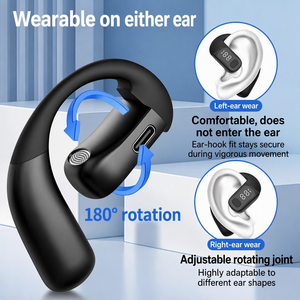
Open-ear Bluetooth Headphones (OWS) with Ear-hook Design: Ultra-long Battery Life, High-definition Sound Quality HE-25
View Product Specs →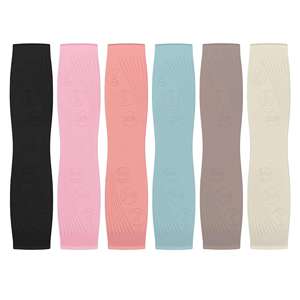
Custom Logo 40 LBs Durable High Elastic Silicone Resistance Bands for Yoga Fitness Pilates Strength Training Booty Bands
View Product Specs →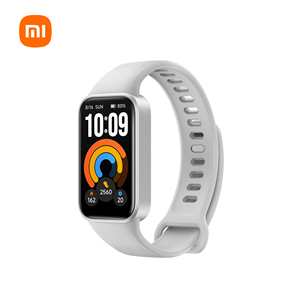
For Smart Band 11 Active 1.47 Inch TFT Display 60Hz 300mAh Battery 5ATM Waterproof Android GPS Health Tracking Sports Band
View Product Specs →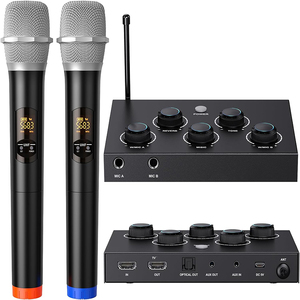
Wireless Microphone System PA UHF 16-Channel Handheld Mics BT Music Streaming Karaoke Style Noise Cancelling Crystal Sound Mixer
View Product Specs →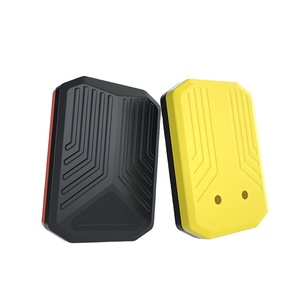
Waterproof Wearable Punch Boxing Tracker for Hands Movement Tracking
View Product Specs →
In Stock cheap clearance 7 Inch Android Kids Tablet for Children Parental Control 1GB RAM 8 GB ROM Pc Q8 EVA Shockproof Case
View Product Specs →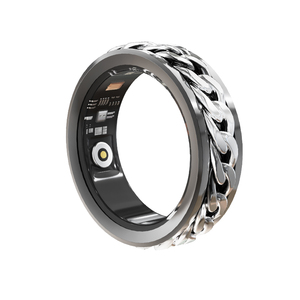
Smart Ring Diamond Design IP68 Waterproof Stainless Steel Health Tracker Heart Rate SpO2 Sleep Monitor Model X15 Sports Tracking
View Product Specs →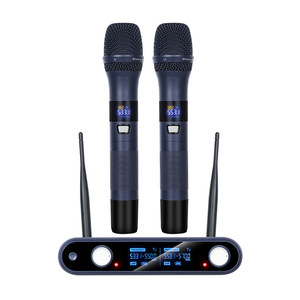
Professional UHF Karaoke Wireless Condenser Microphone System Auto Mute Handheld Mic with 120dB for Family Karaoke Performance
View Product Specs →Engineering Standards for a CE Certified Heart Rate Monitor Supplier
In the global biometrics and wearable telemetry marketplace, securing a verified CE Certified Heart Rate Monitor Supplier is a foundational requirement for brand owners, healthcare tech distributors, and enterprise procurement leaders. European regulatory compliance for wearable health monitors requires an exhaustive understanding of hardware safety, electromagnetic compatibility (EMC), radio frequency efficiency, and biometric signal fidelity.
When procuring optical photoplethysmography (PPG) and electrocardiography (ECG) heart rate monitors for consumer wellness or clinical-grade reference programs, enterprise buyers face significant regulatory barriers. The European Union mandates strict adherence to the Radio Equipment Directive (RED) 2014/53/EU for wirelessly connected wearables, alongside health and safety metrics governed by EN 62479 (SAR Evaluation) and EN 60601-1-2 (EMC Medical/Electrical Safety Standards).
Optical Path Optimization & Photoplethysmography (PPG) Physics
The core sensor architecture built by leading original equipment manufacturers (OEM) relies on multi-wavelength PPG optical sensors. Light-emitting diodes (LEDs) emit light into the microvascular tissue bed of the skin, while photosensors capture micro-changes in light absorption caused by arterial blood pulsations.
- Green Light Telemetry (525nm Peak Wavelength): Optimized for capillary blood flow monitoring during high-intensity exercise and motion dynamics. Offers superior Signal-to-Noise Ratio (SNR) on superficial micro-vessels.
- Infrared (940nm) & Red (660nm) Light Arrays: Penetrate deeper tissue strata to measure pulse oximetry ($SpO_2$) and systemic arterial pulse waves simultaneously with heart rate variability (HRV).
- Motion Artifact (MA) Suppression Firmware: Integrated 6-axis accelerometer dynamic filtering (IIR/FIR filters) dynamically cancels motion noise induced by running, cycling, or daily activities, sustaining measurement accuracy within ±1 to ±2 Beats Per Minute (BPM).
Without rigorous optical enclosure engineering, ambient light leakage degrades the signal-to-noise ratio. Certified suppliers utilize custom optical lenses, anti-reflective mineral glass, and sonic-welded silicone gaskets to maintain an airtight, light-isolated optical chamber with guaranteed IP67 or IP68 waterproof ratings.
Smart Wearable Sensor Hardware & Sourcing Matrix
To assist technical procurement teams in selecting the exact hardware architecture for white-label or OEM deployment, the following comparative framework outlines key telemetry specifications across our active production platforms:
| Wearable Platform | Primary Sensor Tech | Signal Processing & SNR | Compliance & Certifications | Battery & Power Management | Standard OEM MOQ |
|---|---|---|---|---|---|
| ECG + PPG Health Smartwatch | Dual-LED Green/IR PPG + Titanium Electrodes | AFE Signal Amplification, 500Hz Sampling, < 0.5% THD | CE RED, FCC Part 15, RoHS, ISO 9001:2015 | 300mAh Li-Po, 7-10 Days Operation, Magnetic Charging | 1,000 Units |
| Slim Active Smart Band | Single/Dual Green LED Optical PPG Array | Dynamic Motion Filtering (6-Axis Accel Fusion) | CE (RED), REACH, CA Prop 65, IP68 Waterproof | 180mAh Li-Po, 14 Days Ultra-Standby | 2,000 Units |
| Titanium Health Smart Ring | Refractive Micro-PPG + Bio-Impedance Array | Ultra-Low Power Micro-AFE, Skin Tone Calibration | CE RED, FCC, IP68 5ATM Hydrostatic Verified | 18-22mAh Ring Cell, 5-7 Days Battery Life | 500 Units |
| OWS Heart Rate Audio Headset | In-Ear Optical PPG Sensor Array | Real-Time Ear-Canal Micro-Vessel Tracking | CE RED, BT 5.3 Audio, BQB, RoHS Compliant | 70mAh per Earbud + 500mAh Charging Case | 2,000 Units |
Factory Infrastructure & Enterprise Sourcing Advantages
Headquartered in the global electronics capital of Shenzhen, Shenzhen Smareyetech Technology Co., Ltd. has operated at the forefront of wearable micro-electronics since 2010 (legally incorporated in 2013). Spanning an expansive 10,000+ square meter manufacturing campus, the factory integrates complete SMT surface-mounting, automated optical inspection (AOI), cleanroom module assembly, waterproof testing, and custom packaging lines under a unified ISO 9001:2015 Quality Management System.
Standard < 0.3% Defect Rate
While typical industry defect rates range from 2.0% to 5.0%, our standard production yield maintains a verified mass-production defect rate below 0.3%, protecting brand equity and eliminating RMA overhead.
70+ R&D Engineering Force
Our technical center employs over 70 dedicated engineers specializing in firmware customization, Bluetooth protocol stack engineering, iOS/Android companion app development, and biometric algorithm tuning.
Self-Owned Certifications
We hold 8 direct enterprise certifications: ISO 9001:2015, CE (RED), FCC Part 15, RoHS, REACH, WEEE, CA Prop 65, and GCC, streamlining seamless international customs clearance.
4-Step In-Line Quality Assurance Protocol
Quality assurance is embedded directly into our manufacturing execution system (MES). Every batch of heart rate monitors and smart wearables undergoes a compulsory 4-stage inspection routine before packing:
- Step 1: Automated Functional Testing: 100% verification of optical sensor current response, Bluetooth 5.x pairing stability, charging IC efficiency, and haptic feedback.
- Step 2: Microscopic Screen & Optical Lens Inspection: Checks display luminosity, touch screen touch-grid accuracy, and optical glass scratch/dust sealing.
- Step 3: 48-Hour Battery & Thermal Aging: Every assembly undergoes 48 hours of continuous charge-discharge cycling inside temperature-controlled burn-in chambers to screen out latent battery degradation.
- Step 4: Hydrostatic Pressure Waterproof Test: Air-pressure differential chambers simulate IP67/IP68 submersion to guarantee structural seal integrity across 100% of manufactured units.
Future Product & Hardware Development Trends in Wearable Biometrics
The wearable biometric telemetry market is undergoing a structural transition. Sourcing managers must align their 3-to-5-year product roadmaps with key emerging technologies to maintain market differentiation:
1. Edge Artificial Intelligence & Neural Signal Processing
Legacy heart rate monitors rely heavily on raw sensor transmission to mobile apps for post-processing. Next-generation architectures embed micro-power Neural Processing Units (NPUs) or DSP cores directly within the microcontroller (e.g., Nordic nRF5340 or Realtek BLE SoCs). On-device machine learning models process photoplethysmographic waveforms in real time, detecting irregular heart rhythms, atrial fibrillation (AFib) precursors, and stress indices locally while cutting Bluetooth power consumption by up to 40%.
2. Multi-Spectral & Bio-Impedance Sensor Fusion
Single-wavelength green LED sensors are giving way to integrated sensor clusters. By combining green, red, and infrared optical channels with Galvanic Skin Response (GSR) / Electrodermal Activity (EDA) electrodes and continuous skin temperature sensors, wearables transform from basic step-and-pulse bands into holistic wellness telemetry hubs capable of monitoring autonomic nervous system stress, sleep staging, and vascular elasticity.
3. Non-Invasive Continuous Glucose & Lactate Estimation
While true medical continuous glucose monitoring (CGM) requires subcutaneous needles, advanced optical research focuses on multi-wavelength spectroscopic analysis and interstitial fluid bio-impedance. Wearable OEMs are actively testing continuous metabolic trend markers to provide early lifestyle wellness alerts, offering massive expansion opportunities for consumer brands.
4. Form Factor Diversification: Rings and OWS Headphones
Wrist-worn watches remain dominant, but alternative form factors are experiencing rapid market growth. Smart Rings crafted from aerospace-grade titanium or zirconia ceramics offer elevated user compliance due to their lightweight design and discreet wearability. Concurrently, Open-Ear Wearable Stereo (OWS) headsets leverage the rich micro-vascular bed of the ear canal to capture ultra-precise pulse telemetry during dynamic movement.
Strategic Sourcing & Procurement Trends for Global Buyers
As retail channels and ecommerce platforms become increasingly saturated with low-grade consumer electronics, professional buyers must evaluate total cost of ownership (TCO) and long-term supply chain resilience rather than initial FOB unit price alone.
OEM vs. ODM Selection
White-labeling standard tooling reduces time-to-market (15-25 days). However, custom ODM projects—with exclusive housing molds and client-owned IP—protect long-term brand equity against price wars.
Component Standardization
Partnering with suppliers that utilize industry-standard microcontrollers and optical sensors prevents component obsolescence and mitigates global semiconductor supply bottlenecks.
DDP & Amazon FBA Logistics
Modern B2B contracts require flexible logistics. Leading factories offer direct DDP shipping to Amazon FBA centers (US, EU, UK, JP) with fully compliant barcoding and tax handling.
Frequently Asked Questions (FAQ) for Sourcing Managers
Here are detailed, technical answers to the standard operational, regulatory, and engineering questions raised by international sourcing teams:
What specific CE certifications are required to import heart rate monitors into the European Union?
For consumer wellness heart rate monitors equipped with wireless connectivity (Bluetooth/Wi-Fi/4G), the primary mandatory European framework is the Radio Equipment Directive (RED) 2014/53/EU. This includes compliance testing under EN 300 328 (RF Spectrum efficiency), EN 301 489-1/-17 (EMC compatibility), EN 62479 (Human exposure & SAR), and EN 62368-1 (Electrical safety). RoHS 2.0 (2011/65/EU) and REACH (EC 1907/2006) material non-toxicity compliance are also compulsory.
What is the minimum order quantity (MOQ) for OEM branding versus white-label products?
We operate a multi-tier MOQ system designed to accommodate growing brands and established distributors. White-label customization (laser logo engraving, custom packaging, and custom boot screen logo) starts at 300 units for smart wearable jewelry and 500 units for smart rings, ECG smartwatches, and 4G watches. OEM custom orders (customized casing colors, tailored strap material, custom firmware UI, and white-label mobile companion app) start at 1,000 units for smartwatches and 2,000 units for smart bands and TWS earbuds. Full custom ODM hardware projects start at 3,000 units.
How does your factory achieve a <0.3% mass production defect rate?
Our defect mitigation framework relies on end-to-end quality control spanning four strict checkpoints: 100% functional testing of optical ICs and Bluetooth PCBA boards, high-resolution optical screen inspection, 48-hour continuous battery burn-in and thermal aging, and hydrostatic air-pressure waterproofing validation. By using automated SMT surface mounting and rigorous component incoming inspection (IQC), our defect rate remains consistently below 0.3%, significantly beating the traditional 2–5% consumer electronics industry average.
Can you customize firmware, UI watch faces, and companion iOS/Android mobile apps?
Yes. Our in-house R&D team of 70+ engineers supports full firmware and software customization. We offer custom startup boot logos, brand-specific UI themes, pre-loaded watch faces, bespoke health algorithm tuning, and fully re-skinned white-label companion mobile applications published directly under your Google Play and Apple App Store developer accounts.
What are your standard timelines for samples and mass production orders?
Standard pre-production evaluation samples take 10 to 15 days (with a 7-day expedited rush option available for verified projects). White-label mass production orders are typically fulfilled within 15 to 25 days. First-time OEM custom orders require 45 to 60 days to account for customized packaging, firmware builds, and trial runs, while OEM repeat orders drop to 30 to 45 days.
Who owns the Intellectual Property (IP) and custom molds for ODM projects?
The client retains 100% legal ownership of all intellectual property, proprietary industrial designs, custom plastic injection molds, and software source code developed under dedicated ODM engineering contracts. We sign comprehensive Non-Disclosure Agreements (NDAs) prior to receiving technical specs and guarantee zero replication or re-sale of client-owned designs to third parties.
Are consumer-grade PPG heart rate monitors classified as medical devices under EU MDR?
No. Consumer smartwatches, health rings, and sports bands featuring PPG heart rate monitoring are classified as consumer wellness and fitness devices. Biometric data output is intended for general fitness tracking and reference only. For medical-grade programs requiring formal EU MDR (Medical Device Regulation 2017/745 Class IIa) registration, our compliance team works alongside clients to provide raw sensor validation reports, EMC lab test data, and technical files to support formal clinical certification.
Do you support Amazon FBA DDP logistics and international shipping terms?
Yes. We regularly export under standard FOB, CIF, EXW, and DDP terms to over 50 countries. Our specialized Amazon FBA DDP freight service includes complete customs clearance, duty payment, labeling, and direct delivery into Amazon fulfillment centers across the United States, European Union, United Kingdom, Japan, and Australia, with average transit times of 10 to 18 days.
What warranty policy and after-sales support are provided for bulk orders?
All manufactured products include a standard 12-month manufacturer quality warranty. We provide optional 1% to 2% spare unit allocations or replacement components for high-volume orders, alongside complete technical documentation and software firmware update support. Enterprise clients in the EEA and UK also benefit from statutory consumer guarantee compliance support.
How can prospective clients initiate a customized hardware quote or sample evaluation?
Procurement teams can submit detailed project briefs (including estimated annual volume, target market certifications, and required software scope) directly through our live chat system or inquiry channel. A dedicated hardware project engineer will analyze your requirements and issue a comprehensive platform proposal within one business day.
Accelerate Your Wearable Hardware Program with a Certified OEM Partner
Connect directly with our engineering team to review technical specifications, request ISO/CE compliance files, or request custom prototyping for your brand.