Featured Smart Hardware & Telemetry Hardware platforms
Explore our industrial-grade telematics, smart rings, health monitoring, and AI translation platforms engineered for global B2B deployment, private-label branding, and OEM integration.
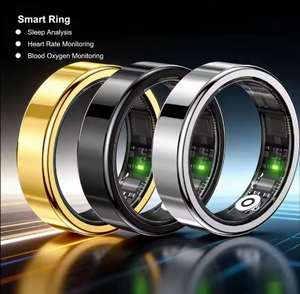
Fashionable Smart Ring for Men and Women - Sleep Analyzer, Heart Rate, Blood Pressure Monitor, Fitness Tracker
Get Catalog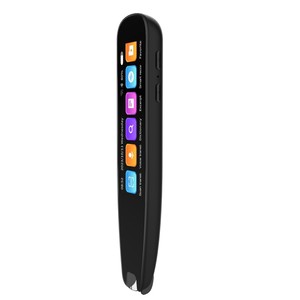
S8 PRO Translation Pen IPS Display Global Voice Translation Text Reader Smart AI Portable Translator with Speech Recognition
Get Catalog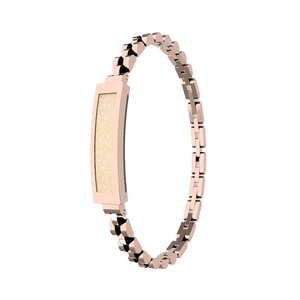
Smart Bracelet, Screenless Band, Health Monitor, Step Counter, Gemstone Chain, Universal for Seniors and Adults
Get Catalog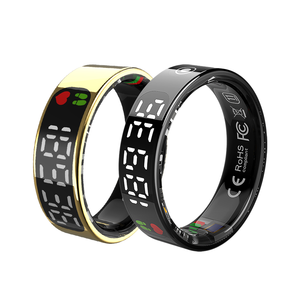
Smart Fitness Ring Steel Case Magnetic Charging GPS Tracker HRV Monitor IP68 Waterproof 11-30 Days Battery Life App Control 3G
Get Catalog
AI Smart Scanning Translator Pen, OCR Text to Speech Digital Dictionary Pen for Students Language Learning 142 Languages
Get Catalog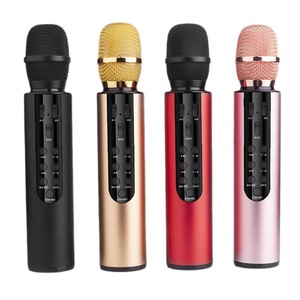
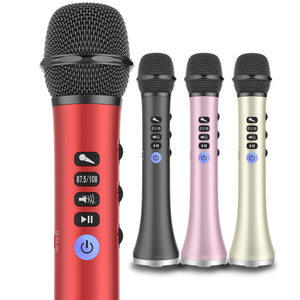
Karaoke Microphone 4 in 1 Wireless Microphone Handheld Portable Karaoke Machine, Home KTV Player For Android & IOS Devices
Get Catalog
Engineering Leadership & Manufacturing Operations
Operating from Shenzhen since 2010 (legally incorporated in 2013), Shenzhen Smareyetech Technology Co., Ltd. delivers vertically integrated OEM/ODM engineering across 50+ export countries.
Automated SMT & Assembly
Equipped with 8+ high-speed automated SMT lines, automated optical inspection (AOI), and RF shielding chambers ensuring flawless PCB population and antenna tuning.
ISO 9001:2015 Quality System
Rigorous 4-stage quality control protocol covering incoming raw materials (IQC), in-line process assembly (IPQC), 48-hour battery burn-in, and 100% waterproof pressure screening.
100% Client IP Protection
Comprehensive NDA execution prior to technical disclosure. Clients retain full ownership of proprietary firmware, industrial enclosures, custom molds, and application assets.
Engineering High-Gain CE Certified Asset GPS Trackers
In global supply chain management, cold-chain logistics, and heavy industrial equipment tracking, asset visibility is a baseline operational requirement. Selecting a reliable CE Certified Asset GPS Tracker Supplier & Exporter requires navigating complex radio spectrum standards, extreme power management constraints, and ruggedized environmental engineering.
The CE Compliance Framework: Radio Equipment Directive (RED 2014/53/EU)
For an asset GPS tracker to legally cross European Economic Area (EEA) borders and function flawlessly within global cellular networks, CE marking under the RED Directive is non-negotiable. Smareyetech’s asset trackers undergo mandatory testing across four vital regulatory pillars:
- ETSI EN 301 489-1 / -19 / -52 (EMC Isolation): Validates that internal cellular modules (LTE-M/NB-IoT/4G) and GNSS receivers resist electro-magnetic interference without causing noise on adjacent frequency bands.
- ETSI EN 300 328 & ETSI EN 301 908 (Spectrum Efficiency): Guarantees optimal RF power output, antenna harmonic suppression, and transmission stability across multi-band networks.
- EN 62368-1 (Electrical & Thermal Safety): Verifies battery safety under thermal stress, over-charge protection circuitry, and structural integrity during industrial operation.
- EN 62311 / EN 50566 (SAR & Human Exposure): Confirms RF radiation safety thresholds during handling, mounting, and operational proximity.
Micro-Amp Power Optimization & Extreme Chemical Battery Life
Asset trackers deployed on unpowered assets—such as intermodal shipping containers, rail cars, high-value machinery, and cargo trailers—rely entirely on self-contained energy stores. Smareyetech integrates ultra-low-power micro-controller units (MCUs) featuring deep-sleep currents under 5 microamps (5µA).
By pairing military-grade LiSoCl2 (Lithium Thionyl Chloride) non-rechargeable chemistry or industrial-grade Li-Polymer rechargeable battery banks with intelligent motion-triggered sleep algorithms, our trackers deliver operational lifespans ranging from 3 to 10 years on a single maintenance cycle (configured at 1–2 periodic GNSS pings per day).
Multi-Constellation Hybrid Positioning Matrix
Dependable asset tracking requires continuous positioning, even when assets move indoors, under metal structures, or through urban canyons. Our hardware platform combines a multi-constellation GNSS engine with secondary location triangulation technologies:
| Positioning Technology | Environmental Coverage | Accuracy Radius | Power Consumption Profile |
|---|---|---|---|
| GNSS (GPS, GLONASS, Galileo, BeiDou) | Direct Line-of-Sight Outdoors | 2.5m - 5.0m | High (Active RF & Processing) |
| Wi-Fi BSSID Sniffing | Indoor Freight Hubs & Warehouses | 10.0m - 30.0m | Ultra-Low (Passive Scan Only) |
| Cellular Tower ID (LBS) | Transit Tunnels & Underground Depots | 100m - 2,000m | Micro-Amp Level (Piggyback Signal) |
| BLE Beacon Triangulation | Enclosed Cargo Bay / Cold-Chain Pods | 1.0m - 3.0m | Minimal (Low-Energy Broadcast) |
Global Procurement Trends (2026–2030 Transition)
Enterprise procurement directors must align hardware specifications with emerging technological shifts. Below are the four core macro trends driving international telemetry sourcing.
Direct-to-Cellular Satellite NTN
Procurement is transitioning from legacy terrestrial 2G/3G cellular models to 3GPP Release-17 Non-Terrestrial Network (NTN) satellite connectivity, ensuring uninterrupted tracking across open ocean transits and remote desert routes.
Energy Harvesting Hybrid Power
Next-generation asset trackers integrate thin-film flexible solar photovoltaic panels and kinetic energy harvesters to supplement primary lithium cells, extending deployment lifespans to match 15-year container lifecycle targets.
BLE Sensor Gateway Convergence
Asset trackers are no longer simple location beacons. Modern hardware serves as a central BLE gateway, aggregating real-time telemetry from wireless temperature, humidity, shock, door-open, and tilt sensors.
Scope 3 Carbon Tracking Mandates
Driven by European ESG reporting regulations (such as CSRD), enterprise clients require asset telematics devices that integrate calibrated mileage and cargo fill-factor algorithms to compute Scope 3 emissions automatically.
Architectural Convergence in Asset Telematics
The global IoT hardware sector is experiencing massive technological convergence. As a trusted CE Certified Asset GPS Tracker Exporter, Smareyetech integrates advanced hardware architecture innovations directly into our manufacturing lines.
1. AI Edge Anomaly Detection
By leveraging 6-axis MEMS accelerometers and gyroscopes processed via micro-edge AI algorithms, our devices distinguish standard transit vibrations from severe drops, vehicle impacts, or unauthorized tampering. Shock alerts are transmitted immediately while non-critical motion data is stored locally, saving up to 40% cellular bandwidth.
2. Global eSIM (eUICC) Integration
Eliminating mechanical SIM card slots removes a primary point of water and dust ingress. Integrated soldered eSIM chipsets (MFF2) allow enterprise buyers to remotely push Over-The-Air (OTA) network profile updates, switching roaming carriers across 180+ countries without physical intervention.
3. IP68 & IP69K Extreme Ingress Housing
Our industrial housings utilize ultrasonic welding, silicone sealing gaskets, and high-tensile Polycarbonate + ABS resin compounds. Standard units pass IP68 immersion testing (up to 2 meters for 48 hours) as well as IP69K high-pressure thermal washdown tests required for heavy machinery and food transport.
Frequently Asked Questions for OEM/ODM Buyers
Get clear, definitive answers regarding minimum order quantities, compliance documentation, software customization, and factory quality assurance.
What is the minimum order quantity (MOQ) for OEM/ODM orders?
We offer structured MOQ tiers: White-Label branding (logo engraving & custom packaging) starts from 300 to 500 units depending on the model. Full OEM custom firmware & casing colors start at 1,000 units. Full ODM hardware engineering starts at 3,000 units.
Which self-owned certifications does the facility hold?
Shenzhen Smareyetech Technology Co., Ltd. holds 8 core organizational and product certifications: ISO 9001:2015 Quality Management System, CE (RED Directive), FCC Part 15, RoHS, REACH, WEEE, California Prop 65, and GCC.
How do you guarantee a mass-production defect rate below 0.3%?
Every production batch undergoes a strict 4-step quality control protocol: 100% component IQC, in-line optical inspection (AOI), 48-hour continuous battery aging under temperature stress, and pneumatic waterproof pressure testing before final box packaging.
Can we customize the firmware protocol and cloud server API?
Yes. Our team of 70+ software engineers supports JT/T808, MQTT, HTTP/HTTPS, CoAP, and custom binary protocols. Firmware over-the-air (FOTA) update servers can be integrated directly into your private enterprise cloud platform.
What is the lead time for prototypes and mass production?
Standard branded samples take 10–15 days (with a 7-day rush option). White-label mass production requires 15–25 days. Custom OEM first orders take 45–60 days including prototyping and CE test verification; repeat orders complete in 30–45 days.
Who retains the Intellectual Property (IP) of custom ODM projects?
100% of the Intellectual Property—including PCB schematics, industrial design CAD files, custom enclosure molds, and app source code—belongs exclusively to the client upon contract fulfillment. NDAs are standard practice before technical disclosure.
Smareyetech vs. Standard Market Telematics
Review quantifiable performance metrics and operational parameters engineered into our asset tracking and wearable hardware lines.
| Evaluation Metric | Smareyetech OEM Specification | Standard Industry Average | Enterprise Operational Benefit |
|---|---|---|---|
| Hardware Defect Rate | < 0.3% Verified | 2.0% - 5.0% | Eliminates costly RMA returns & field swap labor |
| Deep Sleep Current | < 5 µA (Microamps) | 15 µA - 35 µA | Extends field deployment lifespan by up to 200% |
| Ingress Protection | Dual IP68 / IP69K Sealed | IP65 / Basic IP67 | Withstands high-pressure steam cleaning & ocean spray |
| Regulatory Testing | CE (RED), FCC, RoHS, REACH | Partial / Self-Declared | Guarantees 100% legal customs clearance globally |
| FOTA Security Protocol | AES-256 Encrypted Delta FOTA | Unencrypted HTTP FOTA | Prevents malicious firmware injection & network breaches |
Ready to Engineer Your Custom Asset Tracking Hardware?
Partner with an established Shenzhen OEM/ODM manufacturer. Request technical datasheets, full CE test reports, and factory-direct price quotes within 24 business hours.