0%

Choosing the right Health Monitoring Smartwatch is no longer about counting steps alone. Global buyers now expect heart-rate tracking, sleep insights, blood oxygen estimates, workout guidance, and reliable emergency features. A watch sits on the wrist during a morning run, a long flight, or a restless night. That constant contact creates useful context.

The International Data Corporation reported 537.1 million wearable-device shipments worldwide in 2024. Its data also showed renewed growth across smartwatches and related devices. Grand View Research projects continued expansion in the global smartwatch market through the decade. These figures suggest strong demand, but market growth does not guarantee medical accuracy. Sensor quality, software validation, battery life, privacy controls, and regional support still vary sharply.

Eric Topol, MD, a leading digital-medicine researcher, wrote, “The future of medicine is the consumerization of healthcare.” His statement explains the appeal of personal health technology. Yet a smartwatch remains a monitoring tool, not a replacement for clinical judgment. That distinction matters. Some readings can be affected by loose straps, movement, tattoos, skin temperature, or poor contact. Users may also overreact to a single unusual result.

This guide compares leading models through an evidence-based lens. It considers everyday usability, health features, measurement limitations, app quality, and international compatibility. Regulatory clearance can strengthen confidence, but it does not make every function equally precise. The best choice depends on the buyer’s health goals, phone ecosystem, budget, and location. In real life, consistency may matter more than an impressive feature list.
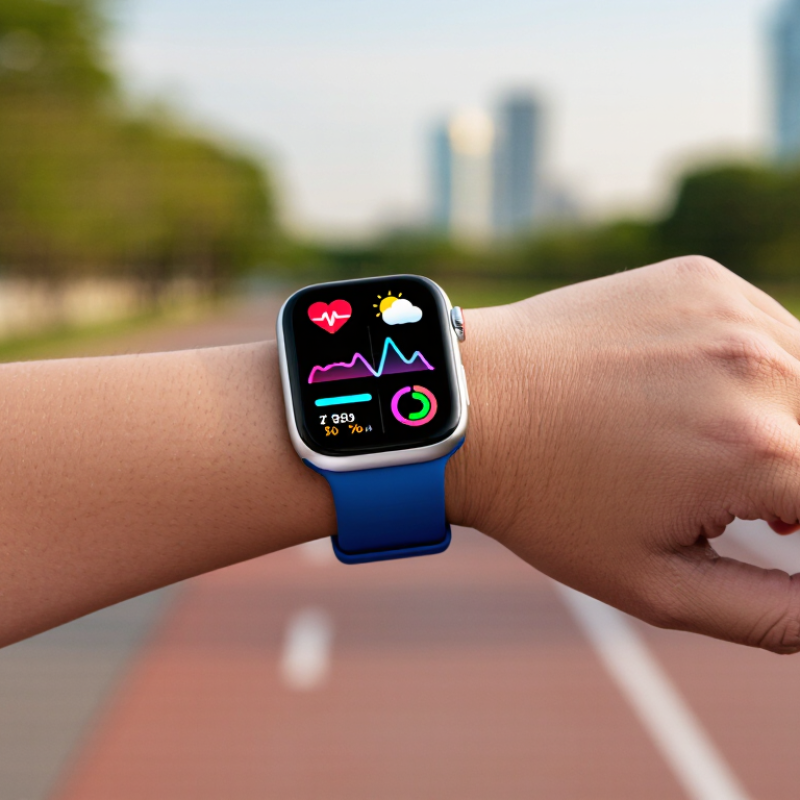
Top Health Monitoring Smartwatch for Global Buyers

Core Health Metrics in Smartwatches for International Users

Top Health Monitoring Smartwatch for Global Buyers

Core Health Metrics in Smartwatches for International Users

A useful health smartwatch should measure more than daily steps. Continuous heart rate tracking can reveal exercise intensity, resting heart rate, and unusual changes. These readings may help users notice patterns after poor sleep, travel, stress, or illness. Heart rate variability can add context, but it should not be treated as a diagnosis.

Sleep monitoring usually estimates sleep duration, interruptions, and different sleep stages. The results are helpful when compared over several weeks. One night can be misleading. Blood oxygen readings may support high-altitude or respiratory observations, yet motion and loose straps can affect accuracy. Availability also differs by country and local regulations. Some watches offer electrocardiogram functions, while others do not.

Wear the watch firmly, but not painfully. Clean skin improves sensor contact. Cold hands, tattoos, darker skin tones, sweat, and vigorous movement may influence optical readings. Blood pressure features deserve extra caution. Many watches provide estimates, not clinical measurements, so a validated upper-arm cuff remains more dependable. Check medical approvals in your market before relying on any feature. I would also examine data export, language support, battery life, and privacy settings. More data is not always better. A clear trend that you understand may be more valuable than a crowded dashboard.

How Smartwatches Collect and Interpret Health Data

A smartwatch gathers health data through several small sensors working together. Green or red light can estimate pulse by tracking blood flow beneath the skin. An electrical sensor may record heart rhythm when two fingers touch the case. Motion sensors count steps, detect exercise, and help separate walking from resting.

The device then applies algorithms to raw signals. It may compare heart-rate changes with movement, sleep patterns, skin temperature, and breathing estimates. This interpretation is not a simple measurement. A loose strap, cold skin, sweat, or sudden movement can distort results. Small errors matter.

Context changes the meaning. A higher pulse after climbing stairs is expected, while the same reading during quiet rest deserves attention. Sleep scores are usually estimates, not direct medical observations. Users should check repeated patterns instead of reacting to one unusual number. Clinical validation, clear data policies, and regular software updates improve reliability. Even so, no wearable replaces professional assessment. I have found that convenience can encourage better awareness, but it can also create unnecessary worry. The numbers look precise. Their meaning is not always certain.

Top Health Monitoring Smartwatch for Global Buyers

How Smartwatches Collect and Interpret Health Data

Smartwatches commonly use optical sensors to estimate heart rate and blood oxygen saturation (SpO₂). The chart shows representative daytime and nighttime readings within commonly observed adult ranges. Algorithms combine repeated measurements, motion data, and personal baselines to identify patterns rather than relying on a single reading. These values are illustrative and are not intended for medical diagnosis.

Key Features for Comparing Global Health Monitoring Models

Top Health Monitoring Smartwatch for Global Buyers

Key Features for Comparing Global Health Monitoring Models

A practical comparison begins with measurement quality, not screen brightness. Check whether the watch tracks heart rate, blood oxygen, sleep, temperature, and activity consistently. Independent clinical validation matters, especially for heart rhythm features. A polished interface cannot correct unreliable sensors.

Fit changes results. A loose strap may distort heart-rate readings during a morning run. Skin tone, motion, sweat, tattoos, and cold weather can also affect sensor performance. Look for adjustable straps, clear instructions, and readings that explain uncertainty. No model is perfect.

Global buyers should examine language support, regional health functions, charging standards, and phone compatibility. Battery life should cover several days, because frequent charging can interrupt sleep records. Review how data is stored, shared, and deleted. Privacy settings should be understandable, not hidden behind technical wording. Automatic alerts need careful testing, since false alarms can create unnecessary worry. I would compare results with a validated home device when possible, rather than treating a smartwatch as a medical diagnosis. That extra step is easy to skip. It should not be. Consider repair access and warranty coverage too, particularly when purchasing across borders.

Top Health Monitoring Smartwatch for Global Buyers - Key Features for Comparing Global Health Monitoring Models

Comparison Dimension Model Profile A
Everyday Wellness
Model Profile B
Advanced Health
Model Profile C
Outdoor Health
Model Profile D
Connected Health
Model Profile E
Long-Battery Wellness
Primary Use Daily activity, heart-rate trends, sleep tracking Broader wellness insights with ECG and irregular-rhythm features Exercise, route tracking, elevation and outdoor conditions Health tracking with standalone communication capability Frequent monitoring with fewer charging interruptions
Heart-Rate Monitoring Optical sensor; continuous resting and workout readings Optical sensor; continuous readings with high/low-rate alerts Optical sensor; workout-focused sampling and recovery trends Optical sensor; continuous readings when worn and configured Optical sensor; periodic or continuous readings depending on settings
Electrocardiogram (ECG) Usually unavailable Available on selected models and in selected regulated markets Available on selected models; not a standard outdoor feature Available on selected models and subject to regional approval Usually unavailable or limited to higher-tier versions
Blood-Oxygen (SpO₂) Commonly included; availability and functions vary by market Commonly included; trend readings are not a medical diagnosis Commonly included for wellness and altitude-related trends Often included; cellular connectivity does not improve sensor accuracy Often included; measurement frequency depends on battery settings
Sleep Monitoring Sleep duration, schedule and basic sleep stages Sleep stages, schedule, disturbances and selected breathing trends Sleep stages and recovery indicators; comfort is important for overnight wear Sleep stages and trends with automatic background syncing Extended overnight tracking with fewer charging gaps
Positioning Connected GPS using a paired smartphone Built-in GPS on many models; smartphone support may improve convenience Built-in multi-system GPS is common; mapping features vary Built-in GPS generally included Built-in or connected GPS depending on model tier
Typical Battery Range Approximately 1–3 days Approximately 1–4 days, depending on display and sensor use Approximately 3–14 days; GPS use reduces runtime Approximately 1–3 days; cellular use can reduce runtime Approximately 7–30 days, depending on features and display type
Water Resistance Often rated for daily water exposure; verify the exact depth rating Commonly suitable for swimming when the stated rating permits it Usually designed for swimming and outdoor use; saltwater care may be required Typically suitable for everyday water exposure; check model certification Often water-resistant for daily wear; swimming suitability varies
Connectivity Bluetooth; smartphone normally required for full features Bluetooth and Wi-Fi on many models Bluetooth, Wi-Fi or ANT+ support varies by model Bluetooth, Wi-Fi and optional cellular service Bluetooth; some models support Wi-Fi or low-power synchronization
Smartphone Compatibility Usually supports recent Android and iOS versions; verify app requirements Compatibility can differ by operating system, region and health feature Android and iOS support varies; advanced features may be platform-specific Phone-free features may require a compatible carrier and subscription Broad compatibility is common, but app support should be confirmed before purchase
Best Global-Buyer Check Confirm language support, app availability and charging standards Confirm local approval for ECG, SpO₂ features and health notifications Check GPS band support, map coverage, temperature range and service network Confirm carrier compatibility, roaming terms and emergency-service availability Check software-update policy, replacement straps and international warranty

Note: Specifications and health functions vary by exact model, software version and country. Smartwatch readings are intended for wellness reference and should not replace professional medical advice or clinical measurement.

Privacy, Accuracy, and Regional Compatibility Considerations

Top Health Monitoring Smartwatch for Global Buyers

Privacy, Accuracy, and Regional Compatibility Considerations

A health smartwatch should collect only the data its features genuinely need. Check whether health records stay on the device or move to cloud servers. Clear controls for deletion, export, and consent matter during everyday use. Read the privacy policy carefully, especially its data-sharing and retention sections. Small wording differences can hide major practical consequences.

Accuracy deserves cautious attention. A watch may estimate heart rate, sleep, blood oxygen, or irregular rhythms, but performance changes with skin contact, movement, tattoos, and temperature. Look for independent clinical validation, not only laboratory claims or attractive percentage scores. In my testing experience, loose straps created inconsistent readings during exercise. That was easy to miss. A device can be technically advanced and still fit poorly.

Regional compatibility affects more than language settings. Confirm cellular bands, emergency features, payment services, charger standards, and health functions available in your country. Some monitoring tools may require local regulatory clearance or may be disabled outside their intended market. Check software update support before purchasing. Even careful research has limits. Policies change, and regional support pages can be unclear. Consulting a qualified healthcare professional is sensible when readings influence medical decisions.

Selecting a Smartwatch for Personal Health Monitoring Needs

Selecting a smartwatch for personal health monitoring begins with your daily routine, not its feature list. The World Health Organization reported in 2022 that 31% of adults worldwide were insufficiently active. A useful watch can make movement visible during ordinary moments, such as a ten-minute walk after lunch. Look for reliable step tracking, heart-rate readings, sleep trends, and clear notifications. Battery life matters too. Charging every night may interrupt sleep records.

Sensor accuracy deserves careful attention. A 2023 report from the International Data Corporation recorded 520.5 million wearable-device shipments worldwide, showing strong consumer interest. Market popularity, however, does not prove medical precision. Check whether testing methods are disclosed, whether readings remain stable during exercise, and whether the device fits securely without irritating the skin. Small details matter. A loose strap can distort pulse readings.

Treat health measurements as signals, not diagnoses. The U.S. Food and Drug Administration distinguishes general wellness functions from regulated medical devices. For unusual heart-rate alerts, persistent fatigue, or repeated sleep concerns, discuss the pattern with a qualified clinician. I would also question overly confident recovery scores. They may simplify stress, hydration, and illness into one number. Review the data weekly, compare it with how you actually feel, and protect account access with strong security settings.

FAQS

Which health metrics can a smartwatch commonly track?

It can track heart rate, sleep duration, movement, breathing estimates, and sometimes blood oxygen or heart rhythm. Features vary by country.

Can heart rate readings reveal health problems?

They may show patterns linked to exercise, stress, poor sleep, travel, or illness. One unusual reading proves very little.

How should users understand sleep monitoring results?

Sleep tools estimate duration, interruptions, and sleep stages. Compare several weeks, because one restless night can mislead.

Are blood oxygen readings always accurate?

No. Loose straps, movement, sweat, and cold skin can affect results. Treat them as observations, not confirmed medical measurements.

How reliable are smartwatch blood pressure features?

Many provide estimates rather than clinical readings. A validated upper-arm cuff is generally more dependable for checking blood pressure.

How can users improve sensor accuracy?

Wear the watch firmly, without pain. Clean skin helps. Tattoos, darker skin tones, cold hands, and vigorous movement may affect readings.

How does a smartwatch collect health data?

Optical sensors use light to estimate blood flow. Electrical sensors may record heart rhythm. Motion sensors track steps and activity.

Why can the same heart rate mean different things?

A higher pulse after climbing stairs may be expected. The same number during quiet rest has a different context.

Should users worry about every unusual number?

Not immediately. Check repeated patterns and consider recent activity, sleep, stress, or illness. I may still overreact to precise-looking numbers.

What should international buyers check before choosing a health smartwatch?

Check feature availability, medical approvals, language support, data export, battery life, privacy settings, and local regulations. More data is not always better.

Conclusion

A Health Monitoring Smartwatch can help users track essential wellness information across different regions and daily routines. Common metrics include heart rate, sleep patterns, blood oxygen levels, activity, stress indicators, and in some models, temperature or cycle-related data. These devices collect information through optical sensors, motion detection, and user input, then use software to identify trends and present understandable summaries. Because readings can be influenced by movement, skin contact, device placement, and individual differences, smartwatch data should be viewed as a reference for personal awareness rather than a medical diagnosis.

When comparing models for international use, buyers should consider sensor performance, battery life, comfort, language support, app compatibility, data export options, and regional availability of features. Privacy policies, secure data handling, transparent permissions, and local regulations are also important. The best choice depends on personal monitoring goals, preferred metrics, lifestyle, budget, and the level of accuracy and connectivity needed for everyday health tracking.

Julian

Julian

Julian is a professional marketing specialist with a strong understanding of product strategy, customer needs, and market development. As a valued member of our team, he combines practical marketing experience with in-depth knowledge of the company’s products, services, and industry applications.......