Smart Wearable OEM/ODM Manufacturer · Since 2010 · Shenzhen, China · Serving brands in 50+ countries
Heart health is becoming more visible on the wrist. The World Health Organization reports that cardiovascular diseases cause approximately 17.9 million deaths worldwide each year. That figure gives everyday monitoring a serious purpose. It also demands careful judgment.
The IDC Worldwide Quarterly Wearable Device Tracker recorded more than 537 million wearable-device shipments globally in 2024. However, not every wearable offers clinically meaningful electrocardiogram data. An EKG Smartwatch may capture a single-lead rhythm strip, flag possible irregularities, or help users share recordings with clinicians. It cannot replace a twelve-lead ECG, medical examination, or emergency care. Small differences matter. Sensor placement, software approval, battery life, skin contact, and regional availability can change the experience.
Cardiologist and digital-health researcher Dr. Eric Topol famously said, “The smartphone is the stethoscope of the 21st century.” His observation reflects a wider shift toward patient-generated health data. Yet convenience can encourage overconfidence. A notification is not a diagnosis. A normal reading is not permanent reassurance. This guide compares the Top 10 EKG Smartwatches for Global Buyers through practical and evidence-aware criteria, including recording quality, regulatory transparency, app usability, privacy controls, and clinician sharing. Product claims were considered alongside manufacturer documentation and independent industry research. Some rankings remain debatable, because regional certifications and software features change quickly. That is an important limitation, not a footnote.
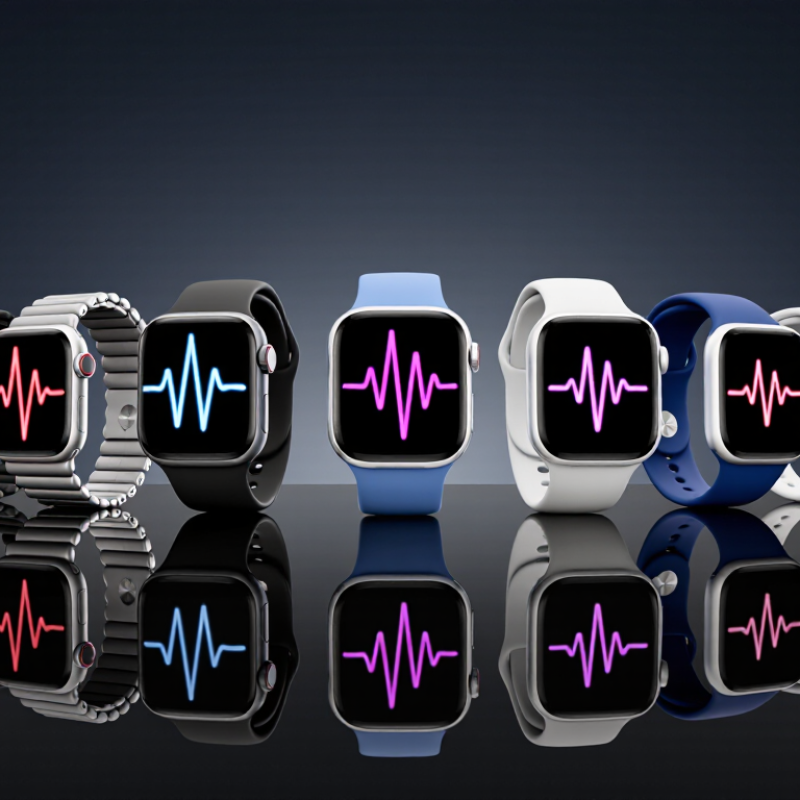
An EKG smartwatch records the heart’s electrical activity through sensors touching your skin. It does not simply count your pulse. It captures timing changes between heartbeats and displays a waveform, often from a single electrical lead.
During a reading, you usually touch a metal area with one finger while wearing the watch snugly. The circuit measures tiny voltage changes across your body, commonly for about 30 seconds. Software then checks the pattern for a regular rhythm or possible irregularity. It may also show heart rate and rhythm labels.
The result is useful, but limited. A smartwatch EKG is not the same as a clinical 12-lead EKG. It may miss problems that affect other parts of the heart. Movement, dry skin, loose contact, sweat, or electrical noise can distort the tracing. In practice, a neat-looking waveform can still be misleading.
For a clearer recording, sit quietly, rest your arm, and keep the sensor clean. Repeat an unusual reading rather than reacting to one result. A persistent irregular pattern, chest discomfort, fainting, or breathing difficulty needs professional medical attention. Smartwatch features and clinical approvals also differ between countries, so buyers should check local availability and guidance.
Choosing among the top 10 EKG smartwatches requires more than comparing screen size or battery claims. Cardiovascular disease causes about 17.9 million deaths annually, according to the World Health Organization’s 2023 fact sheet. Therefore, measurement quality matters. Check whether the device records a single-lead ECG, identifies irregular rhythms, and exports readable reports for clinical review.
Look for regulatory clearance in the target market, not just marketing language. Standards differ across regions. The American Heart Association’s 2024 Heart Disease and Stroke Statistics report recorded 931,578 cardiovascular deaths in the United States during 2021. That figure shows why dependable monitoring deserves priority. Compare electrode placement, recording time, signal stability, and performance during motion. A watch that needs perfect skin contact may struggle during exercise or cold weather.
Also examine privacy controls, language support, charging time, and compatibility with local health systems. ECG readings can support conversations with healthcare professionals, but they cannot replace diagnosis. A polished graph is not proof of accuracy. Users should verify abnormal results through appropriate medical testing. Independent validation studies are valuable, although they may not cover every skin tone, age group, or climate. This remains an uncomfortable limitation. Global buyers should compare the evidence, not simply count health features.
Relative buyer-priority scores based on practical ECG, regulatory, compatibility, and usability considerations.
A single-lead ECG recording commonly captures approximately 30 seconds of electrical activity and is intended for rhythm screening rather than replacing a clinical 12-lead ECG. Global buyers should verify local regulatory availability, supported phone platforms, data export options, subscription requirements, and privacy policies before purchase.
Top 10 EKG Smartwatches: Features, Strengths, and Use Cases
The best ten EKG smartwatches combine wrist-based heart readings with everyday fitness tracking. Their strongest feature is convenience. Users can record a single-lead EKG during palpitations, after exercise, or before a medical appointment. Many models also monitor heart rate, sleep, blood oxygen, steps, and stress patterns. However, sensor accuracy depends on skin contact, motion, and correct placement. A quiet room helps.
Each watch suits a different user. Athletes may prefer fast readings, training zones, and durable water-resistant cases. Older adults may value clear alerts, large text, and simple emergency communication. Frequent travelers should check battery life, charging speed, phone compatibility, and regional EKG availability. Some devices export reports as files, which can support better discussions with qualified healthcare professionals. EKG data is useful evidence, not a diagnosis. It can also create anxiety when readings are misunderstood.
Tips: Keep your wrist still and relaxed during recording. Clean dry skin improves contact. Compare repeated readings, not one unusual result. Check local regulations before purchase. Confirm that the EKG function works in your country. No watch replaces clinical testing. A small limitation remains: consumer sensors cannot detect every heart problem. Use symptoms, history, and professional advice together.
Global availability does not guarantee clinical usefulness. IDC reported 537.7 million wearable devices shipped worldwide in 2024. However, EKG functions still depend on local software, phone operating systems, and approved services. Check whether the watch supports your phone model, regional app store, language, and data-export format. A portable EKG is valuable only when the recording can be reviewed clearly.
Regulation also changes by market. In the United States, buyers should verify relevant FDA authorization for the EKG feature, not merely the device category. European buyers should check applicable EU Medical Device Regulation information. Other markets may involve separate requirements from national authorities. The World Health Organization estimates 17.9 million annual deaths from cardiovascular disease, but an EKG smartwatch cannot diagnose every condition. A normal reading may still miss intermittent symptoms. That limitation deserves attention.
Tips: Test compatibility before payment. Confirm warranty coverage, repair channels, software-update policies, and customer support hours. Ask whether readings can be exported as PDF or raw data. Check electrode placement with dry, clean skin. Avoid models that hide regional restrictions until setup. An imperfect recording is common, especially during movement. Keep the original trace, time, symptoms, and activity notes. Support quality is easy to overlook, yet it can matter more than display brightness. Data references: IDC Worldwide Quarterly Wearable Device Tracker, 2025; WHO Cardiovascular Diseases Fact Sheet, 2023.
Choosing an EKG smartwatch starts with your health goal, not its screen design. The World Health Organization reports that cardiovascular disease caused about 17.9 million deaths in 2019. That figure gives heart monitoring real importance. Still, an EKG smartwatch is a screening tool, not a replacement for clinical testing.
Check whether the device uses a validated single-lead recording. The 2024 European Society of Cardiology guidelines explain that wearable-detected atrial fibrillation usually needs confirmation with a clinician-reviewed ECG. Look for clear recording instructions, adjustable contact points, and stable signals during a 30-second reading. A loose fit can create noise. Cold fingers can also affect results. Small details matter.
Review the software carefully. Can you export recordings as PDF files? Does the app show timestamps and signal quality? Are health alerts clearly separated from medical diagnoses? The 2024 Deloitte Connected Consumer Survey found that privacy remains a major concern for connected-device users, so examine data storage and sharing controls before purchase. Battery life should cover several days, but charging habits vary. I often overvalue advanced features. A simpler watch with reliable readings may serve better. Comfort, screen readability, operating-system compatibility, and service support deserve equal attention. No device is perfect.
| Rank | Smartwatch Profile | EKG Configuration | Typical Recording Time | Typical Battery Life | Water Protection | Platform Support | Best For | Important Buying Check |
|---|---|---|---|---|---|---|---|---|
| 1 | Advanced Health-Focused EKG Watch | Single-lead EKG with irregular-rhythm screening | About 30 seconds per reading | Approximately 1–2 days with frequent health tracking | Usually rated for swimming; confirm the exact depth and duration | Generally optimized for one major mobile operating system | Users prioritizing detailed heart-rhythm monitoring | Check local EKG availability, regulatory clearance, and phone compatibility |
| 2 | Long-Battery EKG Watch | Single-lead EKG with optical heart-rate sensor | About 30 seconds per reading | Approximately 3–7 days, depending on features and display use | Commonly 5 ATM or similar; not automatically suitable for diving | Often supports both major smartphone platforms, but features may differ | Travelers and users who dislike daily charging | Verify whether EKG data can be exported or shared with a clinician |
| 3 | Fitness and EKG Hybrid Watch | Single-lead EKG plus continuous optical pulse tracking | About 30 seconds per reading | Approximately 2–5 days | Usually suitable for rain, sweat, and shallow swimming | Compatibility varies by app and smartphone operating system | Active users who want heart and exercise metrics in one device | Motion, poor skin contact, and tattoos can affect sensor readings |
| 4 | Compact EKG Watch for Everyday Wear | Single-lead EKG with automated rhythm classification | About 30 seconds per reading | Approximately 1–3 days | Typically water-resistant for daily activities; swimming rating varies | Usually dependent on a companion mobile application | Buyers seeking a smaller, lighter watch design | Review case size, strap fit, screen readability, and charging method |
| 5 | ECG and Blood-Oxygen Wellness Watch | Single-lead EKG with pulse-oximetry and optical heart-rate sensing | About 30 seconds per reading | Approximately 2–6 days | Often rated for water exposure; confirm the manufacturer’s conditions | May support multiple platforms with region-dependent features | General wellness tracking and occasional rhythm checks | Blood-oxygen readings are wellness indicators and not a diagnosis |
| 6 | Sleep and EKG Monitoring Watch | Spot EKG with sleep, resting-heart-rate, and recovery metrics | About 30 seconds per reading | Approximately 1–4 days | Usually resistant to sweat and rain; overnight water exposure should be avoided unless specified | Sleep features may require a dedicated mobile application | Users interested in overnight trends and heart-rate variability | Confirm comfort, charging time, and whether sleep data remains on the device or cloud |
| 7 | Outdoor and GPS EKG Watch | Single-lead EKG with optical heart-rate sensor and built-in GPS | About 30 seconds per reading | Approximately 1–4 days; GPS use reduces battery life | Often rated for swimming, but pressure and temperature limits apply | Typically works with a smartphone application for maps and reports | Runners, hikers, and outdoor fitness users | Compare GPS accuracy, offline operation, and EKG availability in your country |
| 8 | Budget-Friendly EKG Smartwatch | Basic single-lead EKG; automated analysis may be limited | About 30 seconds per reading | Approximately 2–7 days | Often splash-resistant; do not assume swimming protection | App quality and language support can vary considerably | First-time buyers with a limited budget | Check sensor validation, privacy terms, return policy, and software updates |
| 9 | Senior-Friendly EKG Watch | Single-lead EKG with large on-screen prompts and alert options | About 30 seconds per reading | Approximately 1–4 days | Usually suitable for everyday splashes; confirm water-resistance rating | Look for emergency and notification features compatible with the user’s phone | Older adults and family-supported health monitoring | Alerts are not a substitute for emergency services or clinical diagnosis |
| 10 | Privacy-Oriented EKG Watch | Single-lead EKG with local storage or controlled data synchronization | About 30 seconds per reading | Approximately 1–5 days | Varies from splash resistance to swimming protection | Check whether core EKG functions work without continuous cloud access | Users concerned about health-data control and sharing | Review encryption, account requirements, data deletion, and export policies |
| EKG smartwatch features, battery life, water resistance, software support, and regulatory availability vary by model, country, and software version. EKG readings are intended to support health monitoring and should not replace professional medical advice. | ||||||||
Check single-lead recording, rhythm detection, report export, battery life, and phone compatibility. Signal quality matters most.
No. It provides monitoring information, not a medical diagnosis. A polished graph can still be misleading. Confirm concerning results with qualified healthcare professionals.
You can record one during palpitations, after exercise, or before a healthcare appointment. Keep your wrist still and relaxed.
Use clean, dry skin and follow the recommended electrode placement. A quiet room helps. Motion can distort the reading.
It may. Cold skin can reduce contact quality, especially during outdoor exercise. This limitation deserves more attention than many comparisons give it.
Not always. Availability and regulatory status can differ between countries. Check local approval and confirm the function works in your region.
Large text, clear alerts, simple controls, and dependable emergency communication may help. Complex menus can become frustrating quickly.
They provide useful evidence, but they may exclude certain skin tones, ages, or climates. The evidence is helpful, not perfect.
No. Consumer sensors cannot detect every heart problem. Compare repeated readings and consider symptoms, medical history, and professional advice together.
An EKG Smartwatch is a wearable device designed to record the heart’s electrical activity through sensors on the wrist and, in some models, additional contact points. It can help users observe heart rate, rhythm patterns, and selected irregularities, while also offering everyday features such as activity tracking, sleep monitoring, notifications, and fitness insights. However, its readings are intended for personal awareness and should not replace professional medical evaluation.
This guide compares the top 10 EKG smartwatches by measurement quality, comfort, battery life, data storage, app usability, connectivity, water resistance, and alert functions. It also explains how compatibility with phones and networks, regional availability, privacy practices, customer support, and local regulatory requirements can affect the buying experience. By considering lifestyle, health-monitoring goals, budget, ease of use, and the need for professional follow-up, global buyers can choose an EKG Smartwatch that fits their needs responsibly.