The 4G LTE Kids Smartwatch is moving from a novelty product to a practical family communication tool. It combines calling, GPS location, school-time controls, and emergency alerts in a child-sized device. IDC’s Worldwide Quarterly Wearable Device Tracker reported strong global wearable demand in 2024, while Counterpoint Research’s Global Smartwatch Shipment Tracker showed continued growth in cellular-enabled watch categories. These reports do not isolate children’s watches perfectly. That limitation matters.
Ramon T. Llamas, a former IDC research director and wearable technology analyst, described the category’s direction clearly: “The smartwatch is becoming a standalone device.” His observation helps explain why LTE connectivity matters. A child can contact a parent without carrying a smartphone. However, network compatibility remains complicated. A watch designed for Europe may not support important LTE bands in North America or Southeast Asia. Buyers should check eSIM activation, roaming limits, location accuracy, battery endurance, and local privacy requirements.
This guide examines the Top 10 4G LTE Kids Smartwatch Types for Global Buyers. The comparison considers GPS performance, two-way calling, SOS response, geofencing, parental controls, water resistance, and app reliability. It also considers quieter details, such as whether the battery survives a full school day and whether a child can press the emergency button easily. No ranking is perfect. Marketing claims can look impressive beside a playground fence, yet real performance may change indoors, underground, or across borders. That is why practical testing and regional verification remain essential.
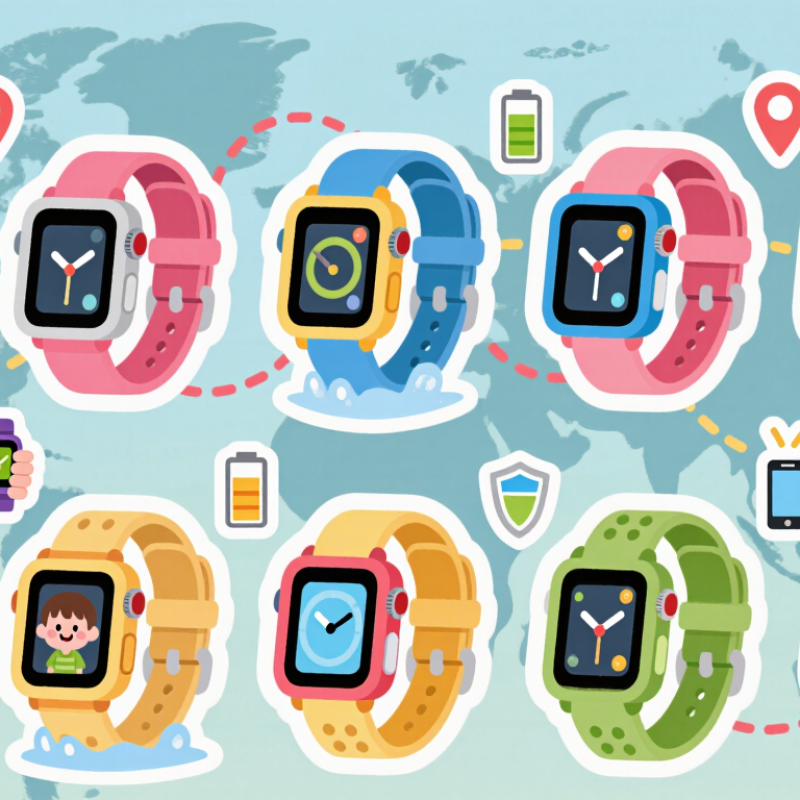
How 4G LTE Kids Smartwatch Types Are Defined
4G LTE kids smartwatch types are defined by how they connect, function, and support a child’s daily routine. The network type matters most. A global model should support suitable LTE bands, local SIM requirements, and stable roaming conditions. Some watches use physical SIM cards, while others rely on embedded SIM technology. These differences affect activation, replacement, and regional availability.
Design creates another useful category. Basic models focus on calling, location sharing, and emergency contact features. Safety-oriented types may add geofencing, voice messaging, and scheduled check-ins. Activity-focused watches often include step tracking, sleep records, and simple reminders. Rugged versions usually offer stronger cases and water resistance, but protection levels can vary greatly. In practical product checks, battery life also separates types. A watch with frequent location updates may need daily charging. That can be inconvenient for younger users.
Tips: Check LTE bands, SIM format, charging time, privacy controls, and water-resistance details before purchase. Confirm whether location services work reliably in the target country. Read the setup instructions, not only the feature list. A smaller screen may improve comfort, but it can make messages harder to read. No category is perfect. Buyers should compare the child’s age, habits, local network, and supervision needs instead of choosing the most expensive type.
Top 10 4G LTE Kids Smartwatch Types for Global Buyers? - How 4G LTE Kids Smartwatch Types Are Defined
| Rank | 4G LTE Kids Smartwatch Type | How the Type Is Defined | Primary Connectivity | Typical Location Features | Communication Functions | Typical Battery Range | Common Protection Level | Best Suited For |
|---|---|---|---|---|---|---|---|---|
| 1 | Basic 4G Calling Watch | A child-focused watch whose main purpose is voice communication through a cellular data or voice connection, with limited extra functions. | 4G LTE + Wi-Fi | GPS, cellular positioning, Wi-Fi positioning | Two-way calling, approved contacts, SOS button, voice messages | About 1–3 days, depending on tracking and call frequency | Usually splash-resistant; protection varies by model | Young children who need simple contact with parents |
| 2 | GPS Safety Tracking Watch | A watch defined by frequent location updates, geofencing, and safety alerts rather than entertainment features. | 4G LTE + GPS | GPS, Wi-Fi, cellular positioning, location history, safe zones | Voice calls, SOS alerts, low-battery and removal alerts | About 1–2 days with regular location updates | Often rated for everyday splash or water resistance | Families prioritizing location awareness and arrival alerts |
| 3 | Video-Calling Kids Watch | A 4G LTE watch equipped with a camera and designed for live face-to-face communication. | 4G LTE + Wi-Fi | GPS and network-based positioning | Video calls, voice calls, approved contacts, text or voice messages | Typically about 1 day under frequent video use | Usually splash-resistant; camera openings may require added care | Children who benefit from visual communication with family |
| 4 | School-Mode Learning Watch | A smartwatch that combines 4G safety communication with scheduled focus settings that restrict selected functions during class time. | 4G LTE + Wi-Fi | GPS, safe zones, location sharing with guardians | Parent-approved calls, SOS, reminders, alarms, limited messaging | About 1–3 days, depending on screen and tracking use | Basic splash resistance is common | School-age children needing controlled communication during school hours |
| 5 | Rugged Outdoor Adventure Watch | A 4G LTE watch distinguished by reinforced construction, stronger water resistance, and outdoor-oriented tracking features. | 4G LTE + GPS | GPS route tracking, location sharing, geofencing | Voice calls, SOS, check-in messages, emergency notifications | About 1–3 days; longer standby is possible with limited tracking | Commonly water-resistant with impact-resistant casing | Outdoor activities, travel, hiking, and active children |
| 6 | Health and Activity Monitoring Watch | A child smartwatch that uses 4G connectivity for safety while emphasizing movement, step, sleep, or basic wellness tracking. | 4G LTE + Bluetooth | GPS may be included; activity data is usually recorded by onboard sensors | Calls, SOS, reminders, activity notifications | About 2–5 days, depending on sensors and display use | Usually splash-resistant for daily wear | Families seeking communication plus basic activity awareness |
| 7 | Family Communication Watch | A watch designed around a closed communication group in which guardians manage approved contacts and messaging permissions. | 4G LTE + Wi-Fi | Optional GPS, Wi-Fi positioning, location sharing | Two-way calls, voice messages, group messages, SOS | About 1–3 days under normal use | Basic water and dust resistance is typical | Families that want a controlled alternative to a smartphone |
| 8 | Prepaid SIM and Travel Watch | A globally oriented watch type selected for flexible cellular plans, regional SIM support, and use while traveling. | 4G LTE with SIM or eSIM | GPS, cellular positioning, and location sharing where supported | Calls, SOS, approved contacts, travel check-ins | About 1–3 days, influenced by roaming and network searching | Usually splash-resistant; travel models may offer stronger sealing | International families and buyers comparing regional network compatibility |
| 9 | Low-Distraction Smartwatch Phone | A 4G LTE wearable that provides essential calling and safety tools without the broad app ecosystem of a general-purpose smartphone. | 4G LTE + Wi-Fi | GPS and guardian-controlled location functions | Calls, SOS, alarms, simple messages, limited or no open app access | About 2–4 days with moderate use | Generally splash-resistant for everyday use | Parents seeking communication without unrestricted social media or browsing |
| 10 | Extended-Standby Emergency Watch | A watch optimized for essential availability, with infrequent data transmission and a reduced feature set to conserve power. | 4G LTE + GPS | On-demand GPS, cellular positioning, emergency location sharing | Emergency calling, SOS, check-in messages, low-power alerts | Approximately 3–7 days with limited tracking and screen activity | Basic splash resistance is common | Occasional use, emergency preparedness, and younger children |
FAQS
They are grouped by network support, safety tools, activity features, and physical durability. Basic types support calls, location sharing, and emergency contacts. Safety-focused types may include geofencing and scheduled check-ins. Activity models often track steps, sleep, and reminders. Rugged designs usually have stronger cases and water resistance.
Check supported LTE bands in the child’s country. Confirm local SIM or eSIM requirements before buying. Roaming may be limited or unavailable. Location services can behave differently across networks. Test local coverage, not only the specification sheet.
A physical SIM can usually be removed and replaced manually. An eSIM is built into the watch. Activation methods may differ by region and service provider. Replacement can be less simple with an eSIM. Read the setup instructions carefully.
Approved contact lists limit who can call the watch. An emergency button can contact selected people quickly. Geofencing may alert adults when a child leaves a defined area. Scheduled check-ins create simple routine points. No feature guarantees perfect protection.
Tracking commonly combines GPS, Wi-Fi, and nearby cellular signals. Outdoor results may be clearer than indoor results. Buildings, weak coverage, and delayed updates can reduce accuracy. Location history and reporting intervals should be adjustable. Accuracy is never perfect.
Battery life depends on location frequency, screen brightness, and calling habits. Frequent tracking may require daily charging. Video calls can drain power quickly. A child may forget to charge it overnight. That practical problem matters.
Water resistance levels vary between models. Check the exact rating before swimming or bathing. A secure strap helps during school activities. A smaller screen may feel comfortable on a small wrist. Tiny text can be difficult to read.
Review how location data is stored and protected. Check parental controls, contact permissions, and sharing settings. Test the speaker and microphone near a noisy school corridor. Read the full setup guide before daily use. Children may remove the watch or press the wrong button.
Conclusion
This guide explains how a 4G LTE Kids Smartwatch can be classified according to its communication method, safety purpose, design, and intended age group. It introduces ten practical smartwatch types, including basic calling watches, GPS tracking models, emergency-focused devices, learning-oriented watches, fitness models, and watches designed for younger or older children. Although each type serves a different need, most share core functions such as voice communication, location support, geofencing, SOS alerts, parental controls, water resistance, and rechargeable battery systems.
For global buyers, comparing smartwatch types requires more than reviewing features. Network compatibility, SIM and eSIM support, coverage availability, language options, battery life, durability, privacy settings, and regional service requirements should all be considered. The final choice should match the child’s age, independence, daily routine, safety needs, and the family’s preferred level of supervision. By evaluating these factors together, parents and distributors can select a suitable 4G LTE Kids Smartwatch type for different children and usage environments.