Smart Wearable OEM/ODM Manufacturer · Since 2010 · Shenzhen, China · Serving brands in 50+ countries
Sourcing AI Smart Glasses in 2026 requires more than comparing frames, cameras, and wholesale prices. Buyers must examine the complete product ecosystem. That includes optical quality, battery performance, audio clarity, artificial intelligence features, mobile compatibility, and after-sales support. A polished sample can hide weak hinges, overheating, or unreliable voice recognition. Test everything.
Mark Zuckerberg, Meta’s founder and CEO, said, “I think that AI glasses are going to be the next major computing platform after smartphones.” His statement reflects the industry’s direction, but it should not replace careful supplier evaluation. A promising demonstration is not proof of production readiness. Buyers need verifiable specifications, stable firmware, documented component sources, and realistic delivery schedules.
This guide explains how to identify capable manufacturers, request useful samples, and compare quotations without focusing only on the lowest price. It considers lens customization, prescription support, camera indicators, privacy controls, packaging, and repair procedures. Suppliers should also provide clear information about data handling and regional compliance requirements. Local regulations can affect cameras, wireless functions, labeling, and consumer protection obligations.
Some decisions remain difficult. A lighter frame may reduce battery capacity. More sensors may improve functionality while increasing heat and maintenance costs. No sourcing checklist is perfect. I have seen product evaluations become too technical and overlook everyday comfort, such as pressure behind the ears after two hours. Buyers should record those details. The strongest purchasing decision balances engineering evidence, user experience, supplier reliability, and responsible market entry.
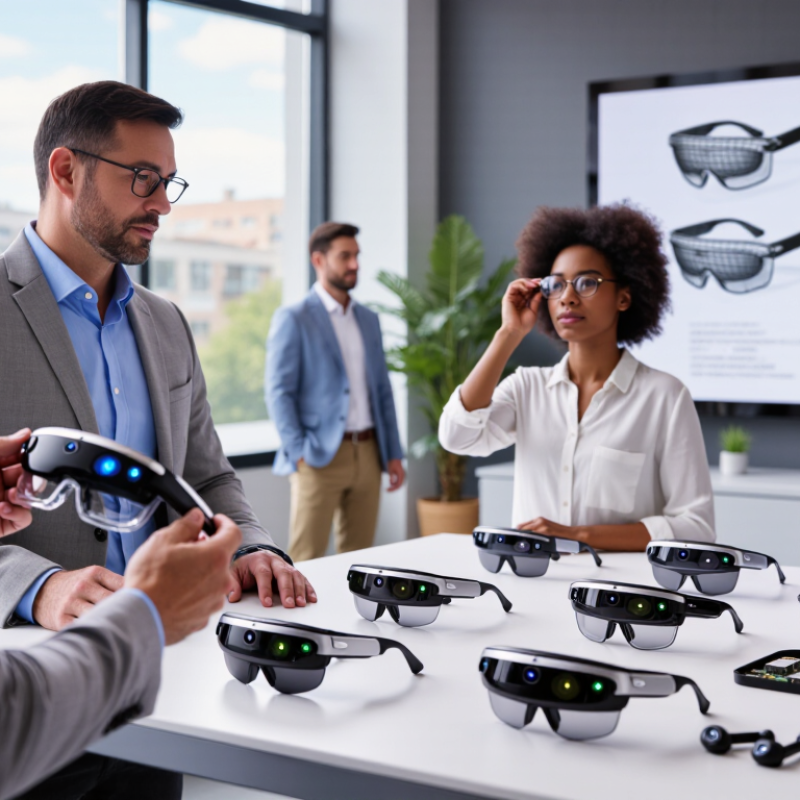
In 2026, AI smart glasses are more than eyewear with a camera. They combine visual sensors, microphones, speakers, connectivity, and conversational software. The defining feature is contextual assistance. Glasses may identify a product label, translate a sign, describe a room, or answer a spoken question. A camera alone does not create intelligence. The system must interpret information and respond naturally. In hands-on trials, response speed matters as much as accuracy. Delayed audio feels awkward during navigation or shopping. Clear speech is essential in noisy streets.
When sourcing AI smart glasses, examine where data is processed. On-device computing can reduce delays and limit unnecessary data transfers. Cloud processing may support stronger models, but it requires careful privacy controls. Ask about encryption, storage periods, user consent, and deletion tools. These details are not optional. Battery life also defines daily usefulness. A device that needs charging before lunch may fail in real work settings. Test comfort with prescription lenses, different face shapes, and several hours of movement.
Reliable evaluation should include scripted tests and unscripted situations. Compare recognition accuracy, translation quality, microphone performance, and failure messages. No model gets every request right. My own testing found that glare, accents, and crowded conversations caused mistakes. That weakness deserves honest reporting. Buyers should also verify software update policies, repair options, accessibility features, and compatibility with workplace systems. The strongest definition of AI smart glasses is practical intelligence, respectful data handling, and dependable performance beyond a short demonstration.
When sourcing AI smart glasses in 2026, buyers should compare real performance, not impressive product claims. A high-resolution camera helps, but image stabilization and low-light clarity matter more in daily use. Check the field of view, autofocus speed, microphone quality, and speaker volume in a noisy room. These details often decide whether the glasses feel useful or frustrating.
Battery life should be tested with continuous recording, voice commands, and wireless data use. Ask suppliers for measured results, not laboratory estimates. Weight matters too. A few extra grams can create pressure around the nose after several hours. Look for adjustable nose pads, balanced frames, and an appropriate water-resistance rating. Comfort is easy to underestimate.
Privacy and software specifications need equal attention. Confirm whether AI processing happens on the device or through cloud services. Ask how recordings are stored, deleted, and protected. Review operating-system compatibility, update support, encryption, and available developer tools. Supplier samples should be tested before bulk orders. I would also inspect repair procedures, warranty terms, and replacement-part availability. Some suppliers provide excellent demonstrations but weak documentation. That gap deserves careful questioning. No specification sheet can replace hands-on testing in real lighting, traffic noise, and ordinary workplace conditions.
When sourcing AI smart glasses in 2026, supplier evaluation should begin with evidence, not impressive demonstrations. Ask for a working sample, full specifications, and a clear development history. Check camera resolution, microphone performance, battery capacity, charging cycles, display brightness, and device weight. Request test results from different lighting and noise conditions. A polished demo can hide weak daily performance.
Manufacturing capability matters as much as software quality. Review factory records, quality-control procedures, component traceability, and production capacity. Ask how suppliers manage optical alignment, heat dissipation, waterproofing, and assembly tolerances. Inspect a pilot batch, not only one hand-finished sample. Compare ten units side by side. Small differences often reveal unstable processes. I once overvalued a supplier’s engineering presentation and underestimated its after-sales process. That was a costly assumption.
Data protection and regulatory readiness require careful review. Suppliers should explain voice recording controls, data storage, user consent, firmware updates, and vulnerability reporting. Request relevant compliance documents for your target markets, then verify their scope and validity. Do not accept vague statements such as “globally certified.” Contracts should define inspection rights, defect rates, replacement timelines, software support, and intellectual-property ownership. References from comparable buyers can help, but they are not proof. Speak with technical and quality teams directly. Silence is also information.
Recommended supplier evaluation weighting for AI smart glasses procurement
This buyer-defined scorecard allocates the highest priority to optical performance, AI functionality, privacy protection, and product reliability. Before placing an order, request objective evidence such as test reports, conformity documents, sample approval records, battery test results, production-capacity data, and after-sales procedures. The percentages represent evaluation weights rather than the performance of any specific company or brand.
Grand View Research estimates the smart-glasses market will grow at roughly 27% annually through 2030. Counterpoint Research also reported triple-digit shipment growth during the first half of 2025. Rapid growth increases sourcing pressure. Buyers should request traceable factory records, component bills, and sample-to-production comparison reports.
Compliance must be checked before price negotiation. For wireless models, verify radio approvals under the target market’s requirements, including FCC or EU Radio Equipment Directive testing. Confirm RoHS, REACH, battery transport documentation, and UN 38.3 test evidence. Camera and microphone functions require privacy impact reviews, clear user notices, data minimization, and secure deletion controls. The EU AI Act may also affect certain software features, especially when systems infer sensitive information.
Quality testing should cover overheating, hinge fatigue, sweat exposure, optical alignment, microphone performance, and battery aging. Request IEC 62368-1 safety evidence where applicable. If the glasses make health claims, medical-device rules and ISO 14971 risk management may apply. I would also test voice recognition in a noisy warehouse, not only in a quiet laboratory. A checklist can still miss practical failures. Supplier audits should sample random production units, record defects, and verify corrective actions. Perfect documentation is not proof of perfect quality.
Plan procurement around the complete lifecycle, not the lowest quotation. IDC’s Worldwide Quarterly Augmented and Virtual Reality Headset Tracker shows renewed growth in lightweight wearable devices. However, shipment forecasts do not guarantee workplace adoption. Define use cases first, such as warehouse picking, remote inspection, or guided maintenance. Then specify camera resolution, battery runtime, field of view, connectivity, language support, and data controls. Keep the first order small. Ten to thirty units can reveal problems before a large commitment.
Ask suppliers for production samples, test reports, firmware policies, and component traceability. Check optical clarity under bright sunlight and dim indoor lighting. Measure heat after two hours. Record charging time, microphone accuracy, and frame pressure. IEC 62368-1 safety evidence is useful, but it does not replace hands-on testing. Gartner’s research on enterprise AI repeatedly highlights data quality, governance, and user trust as adoption barriers. Therefore, test offline behavior and cloud dependency carefully. One uncomfortable finding may matter most: workers may reject a technically strong device that feels heavy.
For long-term supply, request a rolling twelve-month capacity plan. Confirm processor availability, battery sourcing, repair procedures, and minimum order quantities. Use a dual-source strategy for critical parts where practical. The 2024 Deloitte Connected Consumer Survey shows that privacy remains a major concern for connected-device users. Build visible recording indicators, access logs, and deletion procedures into acceptance criteria. Include quarterly quality reviews and firmware change notices in the contract. Our pilot assumption may be wrong. Leave budget for retraining, replacement units, and a second validation round.
They combine cameras, microphones, speakers, connectivity, and conversational software. They interpret surroundings and respond naturally. A camera alone is not intelligence.
Check image stabilization, low-light clarity, autofocus, field of view, microphones, and speaker volume. Test them beside traffic noise. High resolution can still disappoint.
Very important. Delayed audio feels awkward during navigation or shopping. Fast answers improve trust, even when accuracy is imperfect.
Use continuous recording, voice commands, and wireless data. Measure performance during a normal workday. Charging before lunch is a warning sign.
Ask where processing occurs and how recordings are protected. Confirm storage periods, encryption, consent controls, and deletion tools. Vague answers deserve caution.
Wear the glasses for several hours with prescription lenses, if needed. Check nose pressure, frame balance, and fit during movement. A few extra grams matter.
Request working samples, complete specifications, factory records, and quality procedures. Inspect a pilot batch. Compare ten units side by side. One sample proves little.
Glare, accents, low light, and crowded conversations can cause recognition errors. Test real conditions, not only quiet rooms. No model gets everything right.
Sourcing AI Smart Glasses in 2026 requires buyers to look beyond appearance and basic connectivity. These products should be evaluated as integrated wearable systems that combine visual displays, audio, cameras or sensors, voice interaction, software intelligence, battery performance, comfort, durability, and data protection. Buyers should compare display quality, field of view, processing capability, wireless standards, operating time, charging methods, prescription compatibility, user controls, and compatibility with intended applications.
A reliable sourcing strategy also depends on carefully evaluating suppliers and manufacturers. Buyers should review technical experience, production capacity, quality-control procedures, customization capabilities, communication efficiency, and after-sales support. Before placing large orders, they should confirm product documentation, conduct sample testing, verify materials and assembly quality, assess safety and electromagnetic compliance, and protect user data through appropriate technical safeguards. A phased purchasing plan, including prototype review, pilot testing, production inspection, and long-term supply assessment, can reduce risks and support consistent quality, predictable costs, and dependable delivery.