A Smart AI Pet Robot can greet you at the door, follow a voice, or blink beneath a small camera. Yet a lively demo does not guarantee a useful companion. Global buyers need to look past cute faces and compare sensors, interaction quality, privacy settings, battery life, replacement parts, and customer support. Small details matter. A robot that struggles on thick carpet may disappoint in a real home, even if it performs well on a showroom floor.
Human-robot interaction researcher Kate Darling has observed, “People have a natural tendency to anthropomorphize things.” That insight is useful when judging pet robots: expressive eyes can feel meaningful, but they do not prove the device understands emotion. Buyers should check what the robot actually detects, how it responds, and whether its app explains data collection clearly. Test the basics. Can it move around chair legs? Does it respond reliably in a noisy room? Are software updates and support available in the buyer’s region?
This guide compares seven options through practical criteria, not appearance alone. It considers play features, voice interaction, mobility, setup, and ongoing costs, while noting where product claims deserve closer scrutiny. No robot suits every home. Some are better for playful interaction; others offer simpler controls or stronger routines. One caveat: specifications change, and regional availability can shift quickly. Treat the comparison as a starting point, then verify current features with the manufacturer before purchasing.
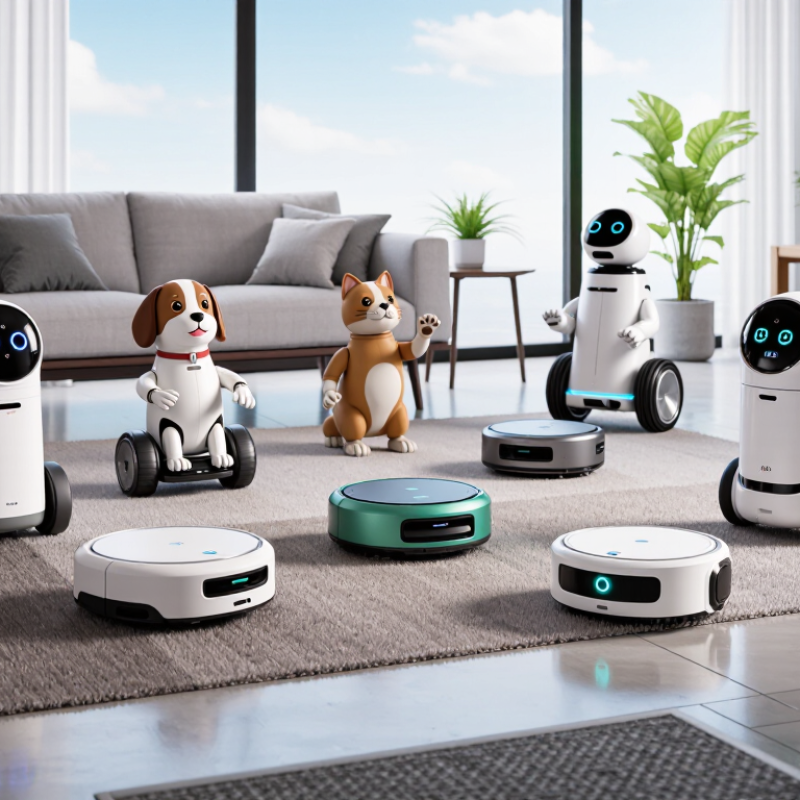
What Smart AI Pet Robots Are and How They Differ
Smart AI pet robots are interactive devices designed to respond to people and their surroundings. They may use microphones, cameras, touch sensors, and software to recognize sounds or simple gestures. Some can follow a person across a room, turn toward a voice, or react when someone strokes a sensor on the head. Their behavior is generated by programmed rules and, in some models, adaptive AI features. It is not the same as an animal’s feelings or judgment. That distinction matters.
A traditional plush toy offers fixed play, while a remote-controlled toy mainly follows direct commands. A smart pet robot can respond without a button press, though its abilities depend on its sensors, software, and internet connection. A quiet room may help voice recognition; television noise can confuse it. Some models remember preferences, but that does not mean they understand a household like a person does. Check which functions work offline and what data the device collects. A robot may recognize a familiar voice one day and miss it in a noisy room the next. That can feel disappointing. Still, its predictable routines—such as a small head turn or soft sound when approached—can make play feel more engaging than a static toy.
7 Best Smart AI Pet Robots for Global Buyers? - What Smart AI Pet Robots Are and How They Differ
| Robot type | What it is | Smart or AI features | How it differs | Best suited to | Practical consideration |
|---|---|---|---|---|---|
| 1. Expressive companion robot pet | A small, animal-inspired robot designed mainly for social interaction rather than household chores. | May respond to touch, sound, movement, or voice; some models adapt responses using sensors or software. | Prioritizes personality and responsive behavior; it generally does not provide live home monitoring or real-pet care. | Buyers seeking an interactive companion or a pet-like experience in a small space. | Interaction depth varies. Check whether speech features work offline and which languages are supported. |
| 2. Robotic cat or dog toy | A toy that imitates selected animal movements or sounds, often using simple sensors and programmed routines. | Can react to touch, buttons, or nearby movement; some have limited pattern-based behavior rather than adaptive AI. | Usually simpler and more play-focused than a conversational companion robot. | Children, casual play, or buyers looking for straightforward animal-like motions. | Confirm age guidance, small-part safety, battery type, and whether replacement parts are available. |
| 3. Mobile pet camera robot | A remotely controlled or partly self-navigating camera on wheels that lets an owner check rooms while away. | May offer a live video feed, two-way audio, motion alerts, and app-based driving; features depend on the model. | Its main purpose is remote viewing and communication, not behaving like a lifelike pet. | Owners who want to check on pets or talk to them from another location. | Requires a suitable Wi-Fi connection and a navigable floor. Review camera privacy and data settings. |
| 4. Treat-dispensing interaction robot | A connected device that releases small portions of food or treats, sometimes with a camera or audio features. | May support scheduled dispensing, remote commands, alerts, or interaction triggered through an app. | Combines feeding-related functions with remote interaction; it is not necessarily a mobile robot. | Owners who want controlled treat-based interaction while away from home. | Check portion control, food compatibility, cleaning requirements, and whether the device needs continuous internet access. |
| 5. Autonomous roaming pet toy | A floor-level toy that moves around to encourage a pet to chase, investigate, or play. | May use timers, obstacle sensors, or motion patterns to change direction and vary play sessions. | Designed for physical play; it generally has less emphasis on speech, companionship, or remote monitoring. | Cats and small pets that enjoy moving toys, subject to the product's intended use. | Check toy durability, entanglement risks, noise level, and whether it is appropriate for the pet's size and behavior. |
| 6. Programmable educational robot pet | A robot shaped like an animal that teaches basic coding, sequencing, or cause-and-effect through guided activities. | Often uses block-based commands, buttons, or a companion app; programmable behavior should not be confused with independent learning. | Its core purpose is learning and experimentation rather than realistic pet interaction. | Families, classrooms, and beginners interested in coding or robotics. | Check the recommended age, lesson language, app availability, and whether an account or internet connection is needed. |
| 7. Therapeutic or social companion robot | A soft or animal-like interactive robot intended to support conversation, routine, or social engagement in care settings. | May react to touch, voice, or movement with pre-set or software-guided responses; capabilities differ widely. | Emphasizes calm interaction and accessibility rather than active play, navigation, or pet-care tasks. | Care environments or individuals who may benefit from structured, low-effort interaction. | Not a substitute for human care or professional treatment. Assess cleaning, comfort, accessibility, and privacy needs. |
Note: “AI” is used differently across the market. Some devices use adaptive software or voice processing, while others rely mainly on sensors and pre-programmed routines. Compare specific features, connectivity, language support, safety information, and local availability before buying.
FAQS
They use microphones, cameras, touch sensors, and movement detectors. A robot may turn toward a familiar voice or pause after a gentle tap.
Usually, it recognizes repeated patterns and selects a matching response. That is not the same as human-like understanding. Sometimes, it gets the cue wrong.
Test how it handles rugs, door thresholds, chair legs, and dim rooms. Check battery life during active play, not just standby.
No. Some pets may chase a moving toy, while others may ignore it. Watch your pet’s reaction to unfamiliar sounds first.
Check what cameras and microphones collect, how recordings are stored, and whether sharing can be limited. Look for clear mute controls and account security settings.
Remote check-ins need a dependable connection. Ask whether basic functions still work during an internet outage. Furniture can also block the camera’s view.
Match its design to your pet’s habits and available floor space. Adjustable speed and volume can help in a small, quiet room.
No. It may offer play or remote check-ins, but it cannot replace attentive care or genuine interaction. It might become repetitive.
Conclusion
A Smart AI Pet Robot is an interactive companion designed to respond to its surroundings and engage with people, rather than simply perform a fixed set of actions. Using sensors, software, and adaptive responses, it may recognize voices, react to touch or movement, and adjust its behavior over time. These features can make interactions feel more personal, though each robot’s capabilities and level of responsiveness can vary.
When comparing options, global buyers can consider interaction style, learning features, safety, maintenance, connectivity, language support, and compatibility with their home environment. The seven types of robots discussed in this guide suit different needs, from playful interaction to quieter companionship and routine assistance. Choosing the right one means matching its functions, size, and care requirements to household routines, available space, and regional power or network conditions. The best choice is the robot that fits comfortably into daily life and meets realistic expectations.